

Facing a higher-rated chess player can feel intimidating, but it does not have to be a one-sided affair. With the right strategies, a solid psychological approach, and smart preparation, you can compete - and even win - against players rated 200 to 400 points above you. This guide breaks down exactly how to close the rating gap, exploit your opponent's expectations, and turn every game into a genuine learning opportunity.
Why Do Lower-Rated Players Lose to Higher-Rated Opponents So Often?
Lower-rated players lose to stronger opponents primarily because they play passively, make one critical tactical error, or fall into familiar patterns their opponent has seen hundreds of times. It is rarely about raw talent - it is about preparation, mindset, and avoiding the mistakes that higher-rated players are specifically trained to punish.
When a 1200-rated player sits down against a 1600, the psychological weight of the rating difference often causes self-defeating behavior. The lower-rated player rushes moves, avoids complications, and secretly hopes for a draw rather than playing to win. That mental framework guarantees a loss before a single piece moves.
The good news is that chess ratings are not fixed laws of the universe. They are historical averages. Any given game is decided by the moves on the board, not the numbers in a database.
"Every chess player has beaten someone they had no business beating - and lost to someone they should have crushed. The board does not care about your rating."
What Opening Strategy Gives You the Best Chance Against a Stronger Player?
The best opening strategy against a higher-rated player is to steer the game into unfamiliar, complex territory early - choosing systems your opponent is less likely to have deeply prepared, rather than playing the most theoretically correct lines that favor their experience.
Choose Solid but Unorthodox Openings
If you always play 1.e4 e5 and your opponent has spent years mastering the Ruy Lopez, you are walking into their living room. Instead, consider sidelines that are objectively sound but statistically rare at your level. As White, the London System (1.d4 2.Nf3 3.Bf4) gives you a reliable structure without needing 20 moves of theory memorized. As Black against 1.e4, the Caro-Kann or the French Defense create closed, strategic battles where one tactical slip does not immediately cost the game.
Study the Openings You Will Actually Play
The key is depth over breadth. Pick one or two opening lines and study them to move 15 rather than memorizing 10 openings to move 5. Higher-rated players often beat lower-rated ones specifically in the transition from opening to middlegame, where they understand the resulting pawn structures and piece placements far better.
Use our openings explorer to study the move frequencies in your chosen lines. When one response appears much more often than the alternatives in the displayed dataset, prepare that branch first while keeping a simple plan for less common replies.
Pro tip: Before your game, look up your opponent's game history if possible. Most online platforms show recent games. If they always play the King's Indian Defense as Black, prepare a sharp Anti-King's Indian system with the Four Pawns Attack (1.d4 Nf6 2.c4 g6 3.Nc3 Bg7 4.e4 d6 5.f4) to take them out of their comfort zone immediately.

How Should You Approach the Middlegame When Playing Up in Rating?
In the middlegame against a stronger player, your goal is to create imbalances, keep the position complex, and avoid simplified positions where their superior technique takes over. The moment the game becomes a clean strategic grind with no tactical tension, a higher-rated player's experience advantage becomes overwhelming.
Create Complications - Even at Some Risk
Stronger players thrive in clean, logical positions. Your best weapon is chaos. This does not mean playing randomly - it means choosing lines with double-edged pawn structures, open files pointing at both kings, and sacrifice opportunities that require precise calculation to refute.
Consider the Sicilian Dragon (1.e4 c5 2.Nf3 d6 3.d4 cxd4 4.Nxd4 Nf6 5.Nc3 g6). When Black castles kingside and White launches the Yugoslav Attack with h4-h5, the position demands exact moves from both sides. An 1100-rated player who has studied this line can absolutely crush a 1500 who has not looked at it in months.
Play for the Position, Not the Rating
Evaluate each position on its own merits. Ask yourself: Is my king safe? Do I have a concrete plan? What is my opponent's threat? These three questions keep you anchored in the position rather than spiraling into anxiety about who is sitting across from you.
Avoid These Common Middlegame Mistakes Against Stronger Opponents
- Trading all the pieces hoping for a draw - this usually just leads to a lost endgame
- Moving pieces without a plan and waiting to react
- Ignoring your opponent's threats because you are focused on your own attack
- Weakening your king position with unnecessary pawn moves (f6, h6, g5 at the wrong moment)
- Giving up the two bishops without compensation in open positions
Complexity is your ally against higher-rated players. A messy, unbalanced position gives you the chance to outplay them in a specific moment. A clean, equal position just lets their overall skill slowly suffocate you.
What Tactical Patterns Do You Need to Know to Punish Stronger Players' Mistakes?
To beat a higher-rated player, you need to be able to punish their mistakes instantly - and stronger players make fewer mistakes, but when they do, those errors are often subtle tactical oversights rather than blunders. The patterns you must master are forks, pins, discovered attacks, and back-rank weaknesses.
The Tactical Patterns That Decide Upset Victories
- Knight forks: A knight that simultaneously attacks two high-value pieces (king, queen, rook) wins material. Always scan for squares where your knight could fork after a forcing sequence.
- Discovered attacks: Moving one piece to unleash an attack from the piece behind it. These are especially hard to see because you are watching the moving piece, not the one that "wakes up."
- Back-rank mates: If your opponent castled early and never advanced a pawn for a luft (escape square), a rook or queen on the eighth rank ends the game immediately.
- Deflections: Forcing a defending piece to move away from its defensive duty. For example, if a queen is the only piece guarding a back-rank mate, a sacrifice that captures the queen - or forces it to move - delivers checkmate.
- Pins against the king: A piece pinned to the king cannot move. That pinned piece can often be attacked and won, or used as leverage for a pawn advance.
Drilling these patterns until they become automatic is the single highest-return activity for beating stronger players. When you have seen a fork pattern 500 times, you will spot it in two seconds of a real game. Your opponent's mistake lasts only one move - you have to be ready to capitalize immediately.
Our chess puzzles and tactics trainer covers all of these patterns specifically - forks, pins, skewers, deflections, discovered attacks, trapped pieces, and back-rank mates - organized by difficulty so you can build genuine pattern recognition at your own pace.
Common trap: Do not assume that because your opponent is rated higher, every sacrifice or combination they play must be sound. Higher-rated players sometimes play speculative attacks, especially in time trouble. Calculate the line yourself rather than immediately retreating out of respect for their rating. Many upsets are missed because the lower-rated player assumed the stronger player "must know something."
How Can You Use the Endgame to Beat Stronger Players?
The endgame is a double-edged sword when playing up in rating. Higher-rated players generally have better endgame technique, but if you specialize in specific endgame types, you can actually reverse this advantage and grind out wins or saves that your opponent expects to be routine.
Should You Avoid or Embrace the Endgame?
It depends on the specific endgame. As a general rule, avoid pure king and pawn endgames against significantly stronger players - these are the most technique-dependent positions in chess and a well-known advantage of 1 extra pawn is often enough for an experienced player to win flawlessly. Instead, prefer rook endgames or opposite-colored bishop endgames, which are statistically much harder to convert even with material advantage.
Endgame Principles That Create Upsets
- Activate your king immediately - The king is a powerful piece in the endgame. A centralized king (d4, e4, d5, e5) often decides the outcome.
- Create a passed pawn - A passer that requires your opponent's attention disrupts their plan and creates counter-play.
- Know the Lucena and Philidor positions - These two rook endgame positions are mandatory knowledge. Philidor saves draws; Lucena wins with an extra pawn. Master both.
- The opposition - In king and pawn endgames, the king with the opposition (meaning the two kings face each other with an odd number of squares between them) controls critical squares. This concept alone decides dozens of endgames.
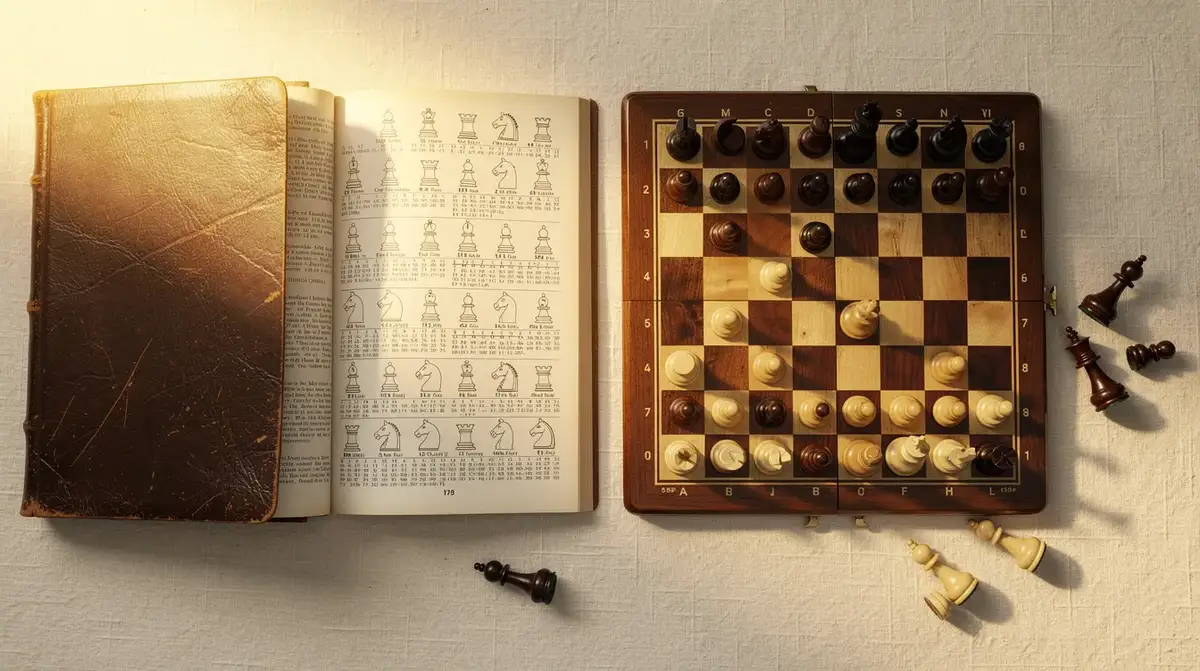
If endgames are a weakness in your game, structured practice makes an enormous difference in a short time. Our endgame training module includes 30+ classic positions across three difficulty tiers, so you can systematically build the exact technique needed to hold or win endgames against stronger opponents.
If you study 10 key endgame positions deeply - king and pawn opposition, Lucena, Philidor, the active rook principle, and opposite-colored bishops - you will be better prepared than the majority of players rated 200 points above you who rely on general experience rather than specific technique.
Can Playing Against Chess Bots Help You Prepare for Stronger Human Opponents?
Yes—especially when the bot is designed to produce varied, human-style decisions rather than simply selecting weaker engine moves. Any bot is still a simulation, so combine that practice with real games and review the differences.
Why Human-Like Bots Are Different
Our human-like chess bots are trained on real human games using custom neural networks, not engine games with artificial handicaps. Each bot has a distinct personality that mirrors how actual humans at that level play:
- Attacking Bot - Launches aggressive attacks and sacrifices material for initiative, just like sharp human players do
- Defensive Bot - Builds solid fortresses and waits for your mistakes - great for learning patience and long-term planning
- Practical Hunter - Plays pragmatic, principled chess that tests your overall game without tactical acrobatics
- Endgame Challenger - Specializes in grinding endgames with technical precision
- Beginner Teacher - Ideal for building foundational habits at a forgiving pace
Practicing against the Attacking Bot specifically prepares you for aggressive opponents who sacrifice and complicate positions early. The Defensive Bot teaches you how to break down solid setups - a critical skill when playing stronger opponents who know how to defend accurately.
Pro tip: Use the Bot Learn Mode to get interactive explanations during the game. Instead of just playing moves, you can see why each move is recommended and what the alternatives were. This turns every practice game into an active lesson rather than passive repetition. Try it at learn chess with AI.
How Do You Analyze Your Games to Improve Faster Against Stronger Opponents?
The fastest way to improve against stronger players is systematic post-game analysis focused specifically on the moments where you diverged from the best moves - not just identifying blunders, but understanding the thinking process that led to them.
What to Look for When Reviewing Games Against Stronger Players
- The first inaccuracy - Often the game was decided much earlier than you think. Find the first move where the evaluation shifted significantly and understand why.
- Missed tactical shots - Did you miss a fork, discovered attack, or sacrifice that would have changed the game? Pattern recognition only builds through repetition of these moments.
- Pawn structure decisions - Did you create unnecessary weaknesses? Doubled pawns, isolated pawns, and backward pawns on open files become targets that stronger players methodically exploit.
- Time management - Did you spend too long on non-critical moves and then rush in the critical moments? This is one of the most common causes of upsets going the wrong way.
- Transition decisions - Was your choice to simplify to an endgame (or keep pieces on) correct? Many losses against stronger players happen because of poor timing on piece exchanges.
Our game analyzer lets you paste any game in PGN format and automatically identifies missed tactics, classifies moves by quality, and highlights the critical moments where the evaluation shifted. This structured feedback makes your self-analysis dramatically more accurate than trying to remember what you were thinking during the game.
The player who reviews their losses with genuine curiosity - asking "why did I lose this?" rather than "why was I unlucky?" - improves three times faster than one who moves on to the next game immediately.
Common trap: Do not just run your games through an engine and memorize the "correct" moves. Engine analysis shows you what is best, but it does not tell you why you made the move you did. Always write down or voice-record your thinking during the game ("I played Nc6 here because I wanted to attack the pawn on d4") so your post-game analysis targets your actual reasoning errors, not just the resulting bad moves.
What Psychological Strategies Help You Win Against Higher-Rated Players?
The psychological edge in beating a higher-rated player comes from playing as if the rating difference does not exist - because in any individual game, it genuinely does not. Concrete psychological tactics include setting a specific positional goal before the game, avoiding time pressure, and resisting the urge to offer draws from a position of fear.
The Most Important Mental Shifts
- Rate the position, not the player - After each move, ask yourself: is this position good for me? Do not think about who your opponent is. The position is either good, equal, or bad - the rating number next to their name does not change which one it is.
- Expect them to make a mistake - Even 2000-rated players make mistakes. Stay alert throughout the entire game. The game is not over at move 10 just because you made a slightly inaccurate opening move.
- Embrace the role of the underdog - You have nothing to lose and everything to gain. Your opponent, on the other hand, is expected to win. This psychological pressure falls on them. Use it.
- Do not rush when nervous - Nerves against a stronger player manifest as fast, impulsive moves. Force yourself to pause for at least 20 seconds before every move, especially in critical moments.
- Never offer draws out of fear - Only offer a draw when the position genuinely justifies it (perpetual check, threefold repetition, insufficient material). Offering a draw from a slightly worse but playable position tells your opponent you have already surrendered mentally.
Higher-rated players expect lower-rated opponents to play passively and make one decisive mistake. The moment you play ambitiously, create real complications, and hold your nerve through the difficult moments, you become a genuinely dangerous opponent - regardless of the rating difference.
What Is a Practical Weekly Training Plan to Beat Stronger Players?
A practical training plan to start beating players 200-400 points above you requires about 5 to 7 hours per week spread across tactics, opening study, game review, and practical play - with the emphasis firmly on tactics and pattern recognition, which gives the fastest rating improvement per hour of study.
A 7-Day Cycle for Rapid Improvement
- Monday - Tactics (45 minutes): Solve 15 to 20 puzzles at your level, focusing on the pattern types that appear most in your own games. Use timed solving to simulate real game conditions.
- Tuesday - Opening Study (30 minutes): Study the next 3 to 5 moves of your main opening lines. Focus on understanding the ideas behind the moves, not just memorizing sequences.
- Wednesday - Game Play + Analysis (60 minutes): Play one 15+10 game and spend 30 minutes analyzing it immediately after with a focus on your thinking process.
- Thursday - Endgame Training (30 minutes): Practice one specific endgame type (rook endgames one week, king and pawn the next). Repetition over weeks builds genuine technique.
- Friday - Bot Practice (45 minutes): Play against a bot set to simulate the playing style of opponents you struggle against. Use the analytical tools to understand the positions that arise.
- Saturday - Game Play (60-90 minutes): Play two or three games specifically seeking out stronger opponents. Do not avoid them - this exposure is the point.
- Sunday - Review and Pattern Study (30 minutes): Review the week's games together, identify the recurring tactical pattern you missed most often, and drill that specific pattern.
If you want a structured daily format that combines puzzles and endgames together, our chess learning course for puzzles and endgames provides exactly that - a progressive curriculum that builds both tactical vision and endgame technique simultaneously.
Pro tip: Track your puzzle accuracy by pattern type, not just overall score. If you are solving 85% of fork puzzles correctly but only 45% of discovered attack puzzles, you know exactly where to invest your next hour of training. Targeted practice beats random practice every time.
Frequently Asked Questions About Playing Against Higher-Rated Players
Is it possible to beat a player rated 400+ points higher than me?
Yes, it is genuinely possible, though the higher-rated player is favored. In the standard Elo expectation formula, a 400-point advantage corresponds to about a 91% expected score—not a 91% win probability, because draws also contribute to expected score. In a single game, preparation, tactics, and composure can still produce an upset.
Should I play faster or slower time controls against stronger opponents?
Slower time controls generally favor stronger players because they have more experience converting advantages in the long run. However, very fast blitz (1+0 or 2+1) can level the playing field through time pressure. For genuine improvement, play 15+10 or longer to practice your thinking process correctly. For maximum upset potential in rated play, 5+3 blitz creates the most chaos.
What is the single most important skill for beating stronger players?
Tactical pattern recognition is the single highest-impact skill. Most games between unequal opponents are decided by one player missing (or finding) a tactical shot. If you can calculate two moves deeper than your current ability and recognize the basic tactical patterns instantly, you will take points off players rated significantly above you.
How do I know if I am improving my chess against stronger opponents?
Track your game quality metrics rather than just your win-loss record. Post-game analysis tools measure your average centipawn loss, the number of tactics you missed, and the accuracy of your opening play. If these metrics improve over 30 to 50 games - even if your win rate against stronger players stays low initially - you are building the foundation for a genuine rating jump.
Should I study different material than players my own rating?
Yes and no. The fundamentals - tactics, basic endgames, opening principles - are universal. But players aiming to beat up-rated opponents should spend more time on imbalanced positions, complex middlegames, and the specific pawn structures that arise from their chosen openings. Studying master games in your opening system is also more valuable than random grandmaster games with no connection to your repertoire.
Beating higher-rated players is a skill you can develop systematically. Start with your opening preparation using the openings explorer, drill your tactical patterns with the chess puzzles and tactics trainer, and analyze your games with the game analyzer to identify exactly where your rating points are being lost. The gap between you and the players above you is smaller than it looks - and it closes faster than you think when you train with purpose.