

Most chess games at the club and intermediate level are not decided by brilliant combinations. They are decided by positional understanding - who has the better structure, the stronger pieces, and the more harmonious plan. If you have ever found yourself frozen in a quiet position, unsure what to do when no tactics are available, this guide will give you a clear framework for making progress every single time the board goes quiet.
What Exactly Is Positional Chess and Why Does It Matter?
Positional chess is the art of improving your pieces, controlling key squares, and building long-term advantages when no immediate tactic exists. While tactical chess asks "what can I win right now?", positional chess asks "how do I make my position stronger so that tactics will appear later on my terms?"
The distinction matters because most chess games - especially at the 800 to 1800 rating range - are not decided by one brilliant queen sacrifice. They are decided over many moves of gradual improvement, where one player slowly accumulates small advantages until the position collapses for the opponent.
Think of it this way: tactics are the weapons you use in battle, but positional chess is the strategy that wins the war before the battle even starts. A player who understands positional principles will consistently find themselves in positions where tactics naturally emerge. The tactics are not invented out of thin air - they grow from superior positioning.
"Chess is not about brilliant moves. It is about making consistently better moves than your opponent, one quiet improvement at a time, until the position speaks for itself."
This is also why reviewing your games with a game analyzer is so valuable in quiet positions - you can see exactly which moves were truly improving your position and which were just shuffling pieces around without purpose.
What Is the Single Most Important Positional Concept a Chess Player Should Learn First?
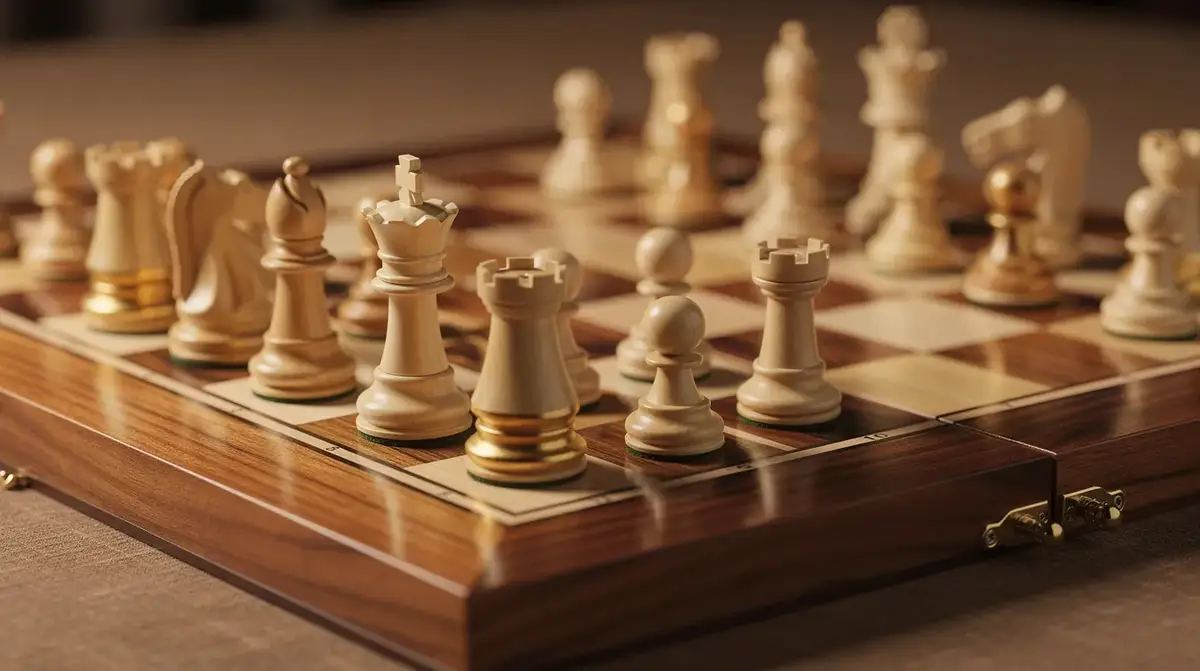
The single most important positional concept is piece activity - making sure every one of your pieces is placed on its best possible square and contributing meaningfully to your position. A grandmaster and a beginner can reach the exact same position, but the grandmaster wins because they understand how to maximize every piece.
The Principle of Piece Harmony
Piece harmony means your pieces work together rather than tripping over each other. Here is a practical checklist to run through in any quiet position:
- Is my worst piece badly placed? Find your least active piece and ask where it wants to go. This is almost always your best move in a quiet position.
- Are my rooks on open or semi-open files? Rooks on closed files are sleeping giants. Find a way to activate them.
- Are my bishops unblocked? A bishop blocked by its own pawns is essentially a very expensive pawn itself.
- Are my knights on outpost squares? A knight on an outpost - a square the opponent cannot attack with pawns - is enormously powerful.
- Is my king safe? Even in positional games, king safety is never irrelevant.
Pro tip: The great Soviet trainer Mark Dvoretsky taught his students to ask "which is my worst-placed piece?" before deciding on a plan. This single question will improve your positional understanding faster than almost anything else you can do.
The Knight Outpost - Chess's Greatest Positional Weapon
A knight placed on a central outpost square - typically d5, e5, d4, or e4 - that cannot be attacked by enemy pawns is one of the most powerful pieces in chess. It controls a huge number of squares, can never be chased away by pawns, and forces the opponent to use a valuable bishop to deal with it. When you have the opportunity to plant a knight on such a square, do it immediately. A knight on d5 supported by a pawn on c4 is worth more than almost any material imbalance you could hope for.
How Do Pawn Structures Tell You What Plan to Follow?
Pawn structures are the skeleton of your position - they determine which pieces are strong or weak, which files will open, and what plans are available to both sides. Learning to read pawn structures is the fastest way to always have a plan, even in the quietest positions.
Because pawns cannot move backwards, every pawn move creates a permanent change in the position. This is why grandmasters think very carefully about pawn moves - each one either creates a new weakness or opens a new possibility.
The Most Common Positional Pawn Structures and Their Plans
- Isolated Queen's Pawn (IQP): The side with the IQP on d4 or d5 should seek active piece play, open lines, and attack. The side fighting against it should blockade the pawn with a knight on d5 and trade pieces to reach a winning endgame.
- Passed pawn: Push it. Support it with pieces behind and in front. A protected passed pawn in the endgame almost always wins.
- Doubled pawns: Usually a structural weakness but they open files for rooks. The player with doubled pawns should seek active piece compensation.
- Pawn majority on one flank: Use that majority to create a passed pawn. Push the pawns and use them as a battering ram.
- Pawn chains: Attack the base. In a classic King's Indian or French structure, the base of the opponent's pawn chain is the target - attack it with the correct piece or pawn lever.
Before you search for a move in a quiet position, look at the pawn structure first. The structure will tell you which files to put your rooks on, which squares are strong or weak, and whether to play on the kingside or queenside. The pawn structure is your GPS in the middlegame.
Pawn Levers - How to Break Open a Closed Position
A pawn lever is a pawn push that challenges an opponent's pawn, typically aiming to open a file or change the structure. In a King's Indian setup after 1.d4 Nf6 2.c4 g6 3.Nc3 Bg7 4.e4 d6 5.Nf3 0-0 6.Be2 e5, Black's classic plan is to play ...f5, a lever that attacks the base of White's central formation. Understanding which pawn lever belongs in your structure is the key to never feeling lost in closed positions.
How Do You Identify and Target Weaknesses in the Opponent's Position?
In positional chess, a weakness is any square, pawn, or piece that cannot be adequately defended and can be permanently targeted. The key word is permanently - a weakness only matters if you can attack it in a way the opponent cannot easily solve.
The Two Types of Positional Weaknesses
Pawn weaknesses include backward pawns, isolated pawns, and doubled pawns. These are fixed targets that your pieces can attack while the opponent's pieces are forced into passive defence.
Square weaknesses are perhaps even more important. A square becomes weak when the pawn that would normally defend it has moved or been exchanged. Classic examples include the f6 and h6 squares when Black plays ...g6, or the d5 square when Black plays ...c6 without the option of ...c5.
Common trap: Many players identify a weakness but then fail to actually put pressure on it. Pointing your pieces at a weak pawn is not enough - you need to create a threat that forces your opponent to make a concession. Simply staring at a weakness without a concrete threat gives the opponent time to reorganize.
The Principle of Two Weaknesses
One of the most important strategic principles in chess is the principle of two weaknesses, developed by Nimzowitsch and refined by later grandmasters. Here is how it works:
- Fix one weakness in the opponent's position and apply pressure to it.
- When the opponent concentrates all their pieces to defend that weakness, create a second weakness on the other side of the board.
- The opponent cannot defend both weaknesses simultaneously, and one of them will eventually fall.
This principle explains why top-level positional games often look so effortless - the winner identified one weakness early, created a second at exactly the right moment, and the opponent simply ran out of defensive resources without a single dramatic tactical blow being struck.
How Does Controlling Open Files and Key Squares Win Chess Games Without Tactics?
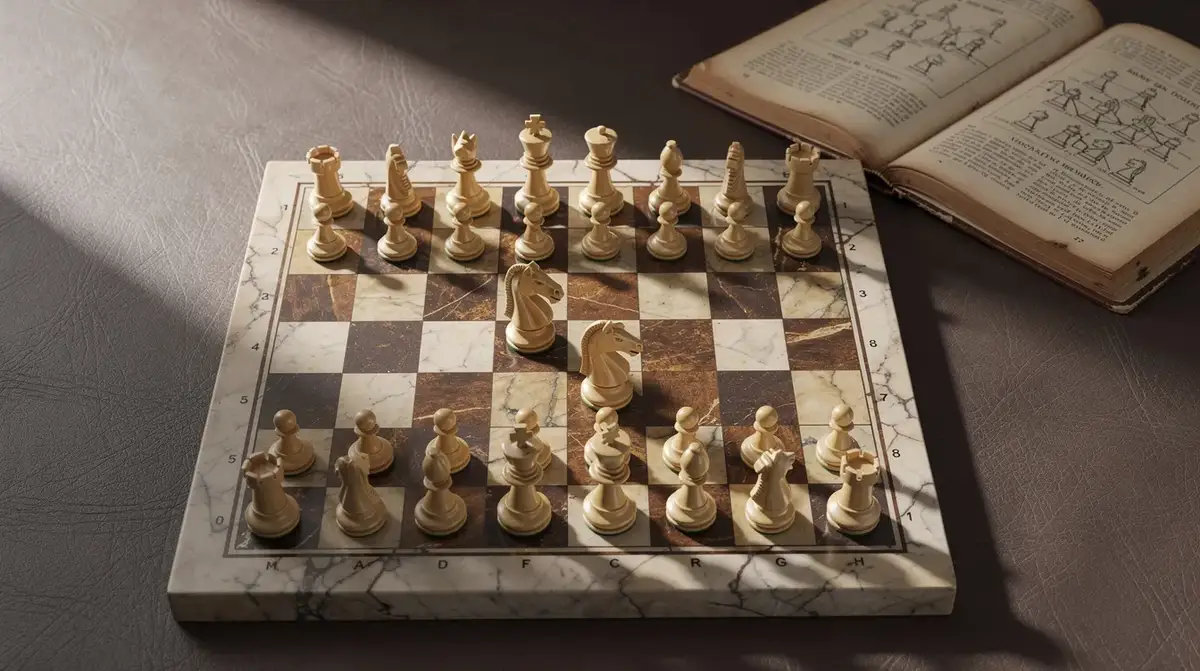
Open files and key squares are the highways and strongholds of positional chess - whoever controls them controls the flow of the game. Rooks on open files, bishops on long diagonals, and knights on central outposts all create pressure that compounds over time without requiring a single tactical blow.
The Open File - Positional Chess's Most Reliable Weapon
When a file is opened by a pawn exchange, it becomes a positional battleground. The player who gets a rook - or better yet, both rooks - on that file first gains a lasting advantage. A rook on the seventh rank (or second rank for Black) is often worth a decisive positional advantage on its own, as it attacks the opponent's pawns from behind and restricts the king.
A practical plan in any position where you have a semi-open file:
- Double your rooks on the open or semi-open file (Ra1-d1 and Rf1-d1 if the d-file is relevant).
- Provoke a pawn exchange to fully open the file if it is semi-open.
- Penetrate to the seventh rank with your more advanced rook.
- Use the rook on the seventh rank to pick up pawns or paralyze the opponent's king.
Pro tip: When you are opening up a position to use your rooks, always check your bishop's position first. An open diagonal for a bishop works alongside open files for rooks to create a positional bind that becomes very difficult to escape from.
Control of an open file, a central outpost, or a long diagonal creates a permanent positional advantage that does not disappear after one move. Unlike a tactic that either works or it does not, a positional advantage can be maintained for many moves while you continue improving your position elsewhere.
What Is the Correct Way to Think and Plan in a Quiet Positional Position?
The correct thinking process in a quiet positional position is to evaluate the position systematically before choosing a move, rather than randomly looking for something to do. A structured thinking process transforms confusing quiet positions into manageable strategic problems.
A Step-by-Step Positional Thinking Method
Here is a framework you can apply in any quiet position where no tactics are immediately visible:
- Check for threats first: Even in quiet positions, always verify your opponent's last move did not create a hidden tactical threat. This takes five seconds and saves games.
- Evaluate the pawn structure: What weaknesses exist for each side? Who has the better long-term structure?
- Assess piece activity: Which side has the more active pieces? Which pieces are doing nothing useful?
- Identify your worst piece: Find it and improve it. This is almost always a good move.
- Determine which flank to play on: Does the structure point to a kingside attack, a queenside push, or a central control plan?
- Create a concrete plan: A plan should have at least two or three moves in sequence. "I want to put my knight on d5" is a plan. "I want to improve my position" is not.
Practicing this thinking method consistently is one of the reasons that training against human-like chess bots is so effective - you face realistic positional problems that human opponents create, not the artificial sharp lines that engines often produce.
Short-Term vs. Long-Term Plans
Not every plan needs to be a grandmaster-level masterwork. In fact, for players up to around 1600, having any concrete plan is a significant advantage over most opponents. A short-term plan might be as simple as: "I will put my rook on the d-file and then bring my knight to d5 via e3." Execute that plan, reassess, and then create the next plan. The accumulation of many small plans is how positional games are won.
A bad plan is better than no plan at all. Moving pieces randomly in a quiet position is the fastest way to let your opponent dictate the game and slowly strangle your position.
How Does Positional Play Connect to the Endgame?
Positional advantages in the middlegame translate directly into winning endgames - a strong pawn structure, a dominant piece, or a passed pawn all become decisive factors once queens come off the board. Understanding this connection is what separates truly strong positional players from those who can only fight for tactical shots.
Many positional players deliberately steer toward endgames when they have a structural advantage, because endgames reward superior pawn structures and piece activity more consistently than complex middlegames. If you have a better bishop, trade everything else off. If you have a passed pawn, simplify into a king-and-pawn endgame where it is decisive.
This is why combining positional study with dedicated endgame training is so powerful - you learn to recognize when your positional advantage is enough to win a simplified ending, and you know exactly how to convert it.
Common trap: Many players who have built a beautiful positional advantage then try to deliver checkmate with a direct attack instead of simplifying. If your positional advantage is in the structure and piece activity, simplification into a winning endgame is almost always more reliable than a speculative kingside attack that gives the opponent counterplay.
Positional play and endgame mastery are inseparable skills. Build your positional understanding in the middlegame by knowing what kind of endgame your structure produces - and whether that endgame favors you or your opponent. Then use that knowledge to decide whether to simplify or keep pieces on the board.
Frequently Asked Questions About Positional Chess
Can beginner chess players learn positional play, or is it only for advanced players?
Beginner players can absolutely learn positional play, and in fact the five core principles - piece activity, pawn structure, open files, weak squares, and having a plan - apply at every level. The beginner chess school is a great place to start applying these ideas in real game conditions with supportive feedback. You do not need to understand every nuance to start thinking positionally - even recognizing that you should improve your worst piece before doing anything else will immediately improve your results.
How do I know when to stop playing positionally and switch to tactics?
Switch to tactics when your positional play has created the necessary preconditions - your pieces are active, your opponent's pieces are restricted, and a specific weakness has been identified. Good positional play naturally creates tactical opportunities. You will find that after following positional principles for ten or fifteen moves, the position suddenly opens up and a tactical shot becomes available that would not have existed before.
Is it better to study puzzles or positional games to improve faster?
Both serve different purposes. Puzzles train your tactical vision - the ability to spot combinations quickly. Positional game study trains your understanding of plans and principles in quiet positions. Players rated 800 to 1200 often improve fastest from chess puzzles and tactics training, because tactical errors are the primary cause of lost games at that level. Players rated 1200 to 1800 benefit enormously from adding positional game study to complement their tactics work.
What openings are best for learning positional chess concepts?
Openings that lead to clear positional structures are ideal for learning. The Queen's Gambit (1.d4 d5 2.c4), the Ruy Lopez (1.e4 e5 2.Nf3 Nc6 3.Bb5), and the Catalan (1.d4 d5 2.c4 e6 3.g3) all create rich positional middlegames where structural play dominates. Exploring how these openings set up positional themes is exactly the kind of study the openings explorer supports - you can see not just the moves but the ideas and structures behind them.
How long does it take to develop strong positional understanding?
With consistent practice, most players see meaningful improvement in their positional understanding within three to six months of dedicated study. The key is deliberate practice - reviewing your own games to identify where you drifted without a plan, studying annotated grandmaster games to see how positional principles are applied, and practicing in positions that force you to think strategically rather than tactically.
The best way to develop your positional understanding is to play regularly against opponents who challenge you with realistic human-like plans - not random engine moves. Try our human-like chess bots, each trained on real human games with a distinct playing style, to practice positional plans in a safe, educational environment. Then use the game analyzer to review your games and see exactly which moments you drifted without a plan and what the correct positional idea was. Positional mastery is built one quiet position at a time - and every game is a new opportunity to improve.