
The endgame is where chess games are truly decided. Many players invest hours studying openings and tactics, yet neglect the phase of the game that converts advantages into wins. In this guide, you will learn the essential endgame techniques every player rated 800 to 1800 needs to master, from basic king and pawn endings to rook endgames, opposition theory, and the most common winning patterns that separate improving players from stagnating ones.
Why Do So Many Players Lose Winning Endgames?
Most players lose winning endgames because they treat the endgame as a continuation of middlegame thinking, failing to activate their king, misunderstanding pawn structure, and not knowing the handful of theoretical positions that decide outcomes. The endgame operates by entirely different rules, and without specific knowledge, even a two-pawn advantage can slip into a draw or worse.
Think about the last time you had an extra pawn and could not convert it. Or the time your opponent's king sprinted across the board while yours sat passively on the back rank. These are not random mistakes. They are knowledge gaps, and they are completely fixable.
Here is what typically goes wrong for players below 1800:
- King stays passive on the back rank when it should march forward
- Pawns are pushed without calculating if they promote under opposition
- Rooks are placed on the wrong files or rows
- Drawing techniques (stalemate traps, fortress positions) are missed by both sides
- Zugzwang positions are neither created nor recognized
Pro tip: Every minute you spend on endgame study returns more rating points than the same time spent memorizing opening theory. The endgame tests pure chess understanding, not preparation.
What Is the Most Important Skill in Chess Endgames?
King activity is the single most important skill in chess endgames. In the endgame, the king transforms from a liability into a powerful fighting piece that must be centralized aggressively to support pawn promotion, attack enemy pawns, and control key squares.
This is the fundamental mindset shift every player must make when transitioning from the middlegame to the endgame. In the opening and middlegame, your king needs protection. The moment queens come off the board, your king needs to move.
How to Activate Your King Correctly
The principle is simple: march your king toward the center and toward the action as quickly as possible. In a king and pawn endgame, the player whose king reaches the critical squares first almost always wins. Consider this pattern:
- Identify where the critical squares are (typically in front of your passed pawns or around the opponent's weak pawns)
- Calculate the shortest path for your king to reach those squares
- Move your king immediately, even before pushing pawns
- Use opposition (explained below) to control the approach
Understanding Opposition in King and Pawn Endings
Opposition is a key concept where two kings stand on the same rank, file, or diagonal with an odd number of squares between them, and the player who does NOT have to move holds the opposition. Holding opposition forces your opponent's king to step aside, letting your king advance.
Direct opposition means the kings are two squares apart on the same rank or file. The player who has to move loses the opposition and must yield ground. Mastering this concept alone can turn many drawn positions into wins and save many lost positions as draws.
"In the endgame, the king is a strong piece. Use it." - Reuben Fine, chess grandmaster and endgame authority
Activate your king when it is safe to do so. A centralized king can attack pawns, support promotion, and restrict the opposing king; its value depends on the concrete position.
How Do You Win King and Pawn Endgames?
You win king and pawn endgames by understanding the rule of the square, opposition, key squares, and passed pawn promotion techniques. These four concepts cover the vast majority of K+P endgame positions you will encounter over the board.
The Rule of the Square
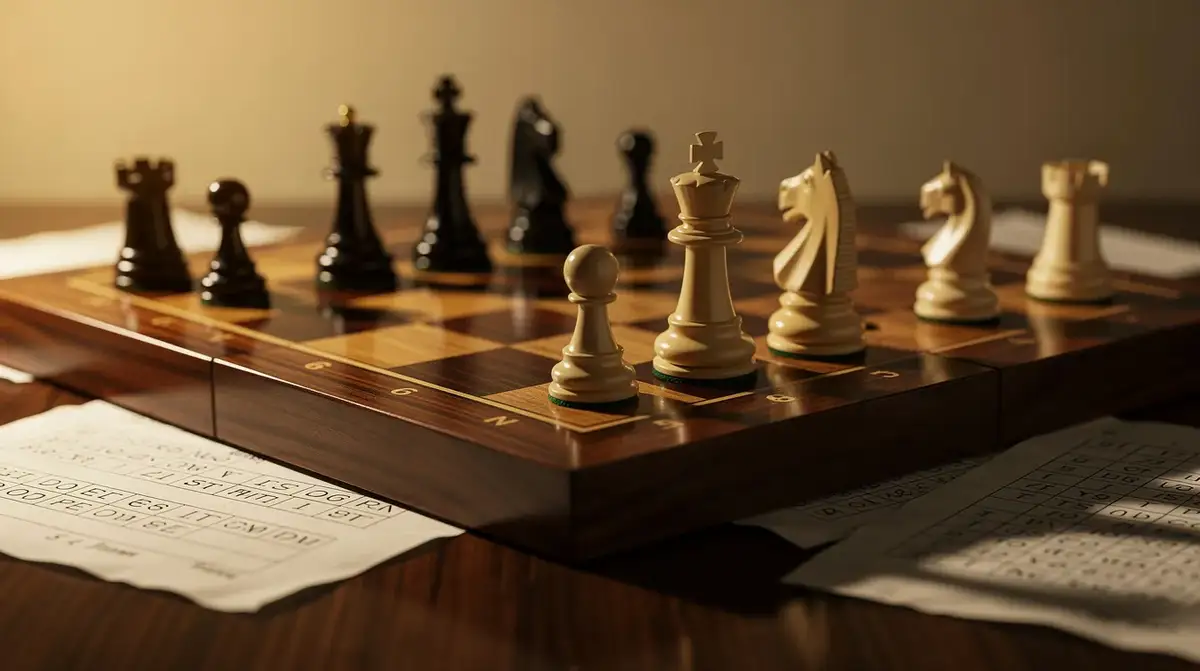
The rule of the square lets you calculate in seconds whether a king can catch a running pawn without having to calculate every move. Draw a diagonal from the pawn to its promotion square, then construct a square using that diagonal. If the opposing king is inside the square (or can step into it on its move), it catches the pawn. If not, the pawn promotes. Replay the decision move by move in the interactive rule of the square lesson.
Key Squares and How They Determine the Win
Every pawn has key squares, which are specific squares that, if your king occupies, guarantee pawn promotion regardless of how the defending king plays. For a pawn on a central file (d or e), the key squares are typically two squares ahead of the pawn on the same file and adjacent files. The interactive key-squares lesson shows how one king route wins while an early pawn push draws. For rook pawns (a or h file), the winning technique is more complex and involves a well-known drawing trick your opponent can exploit.
Common trap: Rook pawns (a and h pawns) are notoriously difficult to promote if the defending king reaches the corner. Even with an extra rook pawn, the game is a draw if the defending king parks itself in front of the promotion square. Always be aware of this drawing fortress when you have an a or h pawn advantage.
Passed Pawns - Create and Advance Them
A passed pawn is a pawn with no opposing pawn on its file or adjacent files blocking or attacking it. In king and pawn endgames, creating a passed pawn is usually the winning strategy. Use the following methods:
- Pawn breaks: Push a pawn to force your opponent to capture, then recapture to create a passed pawn
- Outside passed pawn: Create a passed pawn on one wing to deflect the enemy king, then invade on the other wing
- Protected passed pawn: A passed pawn supported by another pawn is extremely powerful because the king alone cannot blockade it
What Are the Key Techniques in Rook Endgames?
Rook endgames are a common endgame type at all levels, and the Lucena and Philidor positions are the two most important starting techniques to master.
The Lucena Position - The Winning Method
The Lucena position is a fundamental winning technique in rook endgames where you have a rook pawn on the seventh rank with your king in front of the pawn. The winning method is called "building a bridge" and involves:
- Place your rook on the fourth rank (1.Rd4 in the standard position)
- Advance your king to shield the pawn from checks
- Use the rook on the fourth rank to block the checking rook sideways
- Step your king out and escort the pawn to promotion
This is one of the most important patterns in all of chess. Learn it, and you will convert many rook endgame wins that would otherwise slip away.
The Philidor Position - The Drawing Method
The Philidor position is the corresponding defensive technique. When defending a rook endgame against a pawn on the sixth rank or earlier, place your rook on the third rank to cut off the attacking king, and then switch to checking from behind when the pawn advances to the sixth or seventh rank. Memorize these positions and you will save half points that most players your level simply give away.
Pro tip: Practice the Lucena and Philidor positions on our dedicated endgame training module, which covers both techniques with interactive exercises across multiple difficulty levels.
Rook Activity - The Rook Belongs on the Seventh Rank
An active rook is worth far more than a passive one. The seventh rank is the most powerful square for a rook in the endgame because it attacks enemy pawns that have not yet moved from their starting squares and cuts off the enemy king. Two rooks on the seventh rank are called "pigs" because they devour enemy pawns with ease.
Memorize the Lucena and Philidor positions. They appear in grandmaster games and beginner games alike. Knowing these two patterns will save and win more games than almost any other piece of endgame knowledge.
How Do You Use Minor Pieces Effectively in the Endgame?
In minor piece endgames, bishops are generally stronger than knights in open positions with pawns on both sides of the board, while knights outperform bishops in closed positions or when all pawns are on one wing. Understanding this distinction is critical for deciding when to trade pieces.
Bishop Endgames - Good Bishop vs. Bad Bishop
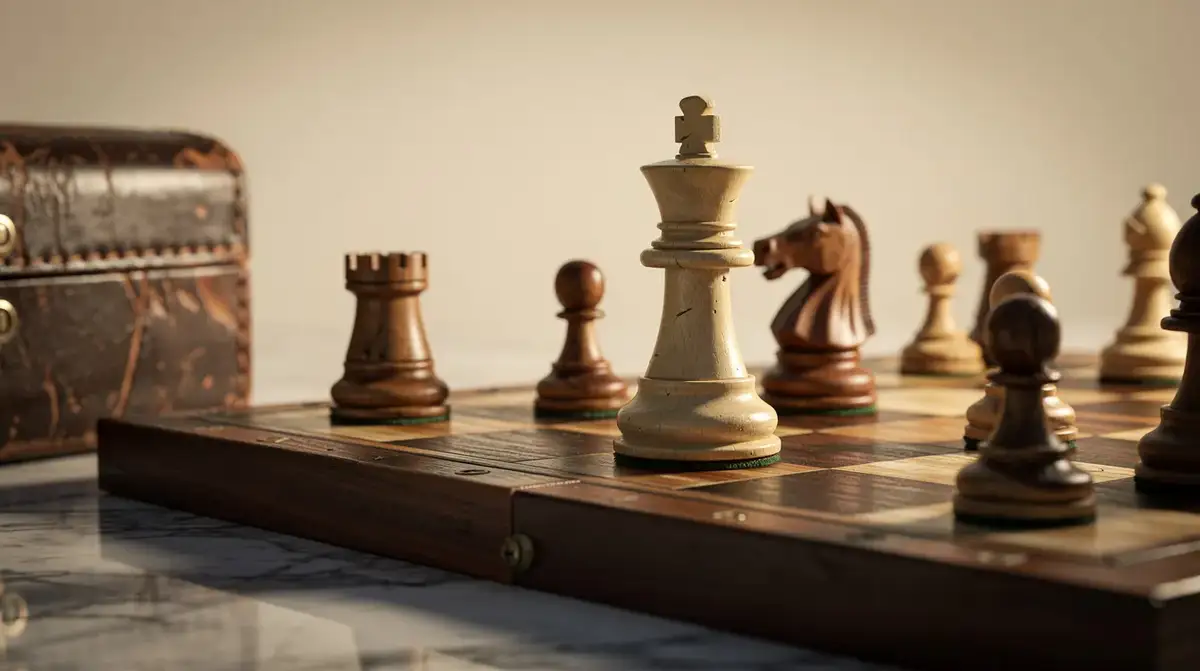
A good bishop moves on squares that are different from where your own pawns are placed. A bad bishop is blocked by its own pawns. When you have a bad bishop, the endgame becomes extremely difficult. To fix a bad bishop:
- Try to exchange it for the opponent's bishop or knight
- Reposition your pawns to the opposite color squares
- Use your king actively to compensate for the bishop's passivity
Opposite-colored bishop endgames are famously drawish. Even two extra pawns are often not enough to win if both sides have bishops on different colors, because the defending bishop can simply blockade the enemy pawns on its own color.
Knight Endgames - Centralization and Outposts
Knights need time to relocate, so central outpost squares are crucial. A knight on a central outpost square (d5, e5 for example) that cannot be attacked by an enemy pawn is a dominant piece. Key principles:
- Centralize your knight immediately in the endgame
- Create a permanent outpost by advancing a pawn to eliminate the enemy pawn that could challenge your knight's square
- Knights are stronger than bishops when all pawns are on one wing because the knight can reach any color square
Common trap: Do not automatically keep your bishop over your knight in the endgame without analyzing the pawn structure. Many players lose winnable knight endgames by trading into an opposite-colored bishop endgame that is a theoretical draw.
What Endgame Patterns Should Every Player Memorize?
Every player should memorize at least five core endgame patterns: the Lucena position, the Philidor position, the king and pawn opposition concept, the bishop and wrong rook pawn draw, and the knight and pawn versus rook pawn endgame fortress. These five patterns appear repeatedly at all levels and knowing them converts half-points into full points consistently.
Triangulation - A Secret Weapon in King and Pawn Endings
Triangulation is a technique where your king takes three moves to reach a square it could have reached in two, effectively losing a tempo to put your opponent in zugzwang. Zugzwang means any move your opponent makes worsens their position, so having to move is a disadvantage. Triangulation is the method to force that situation.
Recognize triangulation opportunities when both kings are in a maneuvering battle and the position is symmetrical. By making a triangular detour with your king, you force your opponent's king to yield a crucial square.
Pawn Breakthroughs
A pawn breakthrough is a tactical strike in pawn endgames where you sacrifice one or two pawns to create an unstoppable passed pawn. The classic example involves three connected pawns against three connected pawns in a blocked structure. Pushing the middle pawn forces a capture, and the resulting passed pawn on one of the flanks cannot be stopped. Always scan for breakthrough possibilities when all pieces have been traded off.
The Stalemate Trap - Use It to Save Lost Positions
Stalemate is your best friend when you are losing an endgame. Many players fail to spot stalemate resources when they are defending. Look for positions where your king has no legal moves and your opponent carelessly captures your last pawn. Common stalemate setups include:
- King trapped in a corner with no pawns remaining
- King forced to the edge of the board with a queen trying to deliver checkmate
- Sacrificing your last pawn to eliminate legal king moves
Pro tip: Train your stalemate recognition with our chess puzzles and tactics trainer, which includes dedicated stalemate trap exercises alongside forks, pins, and other essential patterns.
Endgame knowledge is concrete and transferable. Unlike opening theory that changes with fashion, a Lucena position learned today applies in every game for the rest of your chess career. Invest in memorizing key patterns and you build a permanent chess foundation.
How Can You Practice Endgames to Improve Fastest?
The fastest way to improve your endgames is through deliberate, targeted practice on specific positions rather than passive study. Reading about the Philidor position is far less effective than setting it up and practicing it against resistance until you can execute it blindfolded.
Study Methods That Actually Work
- Isolate specific positions: Take one position at a time (Lucena, king and pawn opposition, etc.) and drill it repeatedly until it is automatic
- Play against a bot: Practice endgame scenarios against AI that replicates human-level resistance without engine precision, so mistakes are punished realistically
- Analyze your own games: After every game, identify the moment the endgame started and evaluate every decision from that point forward
- Solve endgame studies: Composed endgame studies develop calculation and creativity far beyond what standard games provide
- Use incremental difficulty: Start with basic positions and add complexity gradually, for example, going from K+P vs. K before tackling rook endgames
Using Technology to Accelerate Endgame Learning
Modern chess platforms allow you to target your specific weaknesses with precision. Instead of playing full games and hoping to reach an endgame, you can jump directly into endgame positions and practice them hundreds of times in the time it would take to play a handful of full games.
Our endgame training module offers 30 plus classic endgame positions across three difficulty tiers, from absolute beginner positions like K+P vs. K all the way to complex rook endgames, with a specialized endgame AI that plays realistic defensive resistance without the robotic precision of a full engine.
Similarly, reviewing your completed games with a game analyzer that flags missed endgame techniques gives you targeted feedback on exactly where your endgame technique breaks down in real game conditions.
What Are the Most Common Endgame Mistakes and How Do You Avoid Them?
The most common endgame mistakes are passive king placement, incorrect pawn structure decisions, premature pawn pushes, and poor rook coordination. Identifying and eliminating just these four error types can add 100 to 200 rating points for players below 1600.
Mistake 1 - Keeping the King Passive
The fix is mechanical: as soon as your opponent's queen leaves the board, immediately ask yourself where your king should march. Map the route and start moving it there regardless of other considerations. Active king play is almost always correct in the endgame.
Mistake 2 - Pushing All Pawns Without a Plan
Random pawn moves in the endgame are dangerous because they create permanent weaknesses. Before pushing any pawn, ask: does this pawn advance help my king reach key squares? Does this push create a passed pawn or weaken my structure? Pawn moves cannot be taken back, so plan three to five moves ahead before committing.
Mistake 3 - Trading Into a Lost or Drawn Endgame
Always evaluate what endgame you are trading into before exchanging pieces. Trading a good knight for an opponent's bad bishop might give you a material advantage on paper but land you in an opposite-colored bishop endgame that is theoretically drawn. Calculate the endgame consequences before every piece exchange in the late middlegame.
Mistake 4 - Passive Rook Play
Rooks need open files and active positions. A rook stuck behind its own pawns or defending passively on the back rank is worth half a rook in practice. Always ask: can my rook attack something, cut off the enemy king, or get to the seventh rank? If it cannot do any of these, find a way to open lines and activate it.
A rook needs open lines to breathe. Trap your own rook behind passive pawns and you are effectively playing a piece down for the rest of the endgame.
How Long Does It Take to Master Chess Endgames?
A player can achieve functional endgame competence sufficient to convert most practical advantages within 20 to 30 hours of focused study on core positions, while genuine mastery of complex endgame theory takes years. The good news is that the first 10 hours of endgame study produce disproportionate results because the most important patterns appear constantly.
Prioritize your endgame study in this order based on practical frequency:
- King and pawn endgames (opposition, key squares, rule of the square)
- Rook endgames (Lucena, Philidor, active rook principles)
- Queen endgames: practice when to move your king against a pawn on the seventh rank
- Minor piece endgames (bishop vs. knight evaluation)
- Complex multi-piece endgames
This sequence ensures that every hour invested improves your practical results as quickly as possible. Rook endgames alone cover a huge percentage of practical endgames, so heavy investment in Lucena and Philidor positions yields immediate returns.
Where Should You Start Your Endgame Training Right Now?
Start your endgame training with king and pawn versus king positions, as these form the foundation for understanding every other endgame type. Once you can consistently win K+P vs. K with the key squares concept and lose no won positions to stalemate traps, move on to Lucena and Philidor rook endgame positions.
To practice how your king can block the defender's route to a pawn, replay the king shouldering lesson and compare the two king steps from its starting position.
A practical daily routine that transforms endgame play:
- 10 minutes solving endgame puzzles or studies to sharpen calculation
- 20 minutes practicing a specific theoretical position against an AI or training partner
- 10 minutes reviewing one of your recent games from the endgame entry point forward
That is 40 minutes per day. Players who follow this routine consistently for 60 days report dramatic improvements in their ability to convert advantages and save drawn positions.
The fastest path to endgame improvement combines structured study of theoretical positions with practical play against opponents who challenge you correctly. Our endgame training tool is built specifically for this, with positions organized by type and difficulty so you can target your weakest areas immediately.
Pro tip: After studying an endgame technique, immediately test it in a real game context. Play our human-like chess bots in positions that specifically reach the endgame phase. Because every bot is trained on real human games, their endgame play mimics the practical mistakes and tricks you will face against real opponents, not the robotic precision of a standard engine.
Frequently Asked Questions About Chess Endgames
Is the endgame harder than the opening?
The endgame requires different skills than the opening. Openings can be memorized, but endgames demand precise calculation, positional understanding, and knowledge of theoretical positions. Most players find endgames more demanding intellectually but also more rewarding to study because the lessons are universal and permanent.
What is zugzwang and how do you use it?
Zugzwang is a situation where any move a player makes worsens their position, so being forced to move is a disadvantage. Zugzwang occurs almost exclusively in pawn endgames and occasionally in minor piece endgames. Create zugzwang by using triangulation with your king to pass the move to your opponent at the critical moment.
Can you win a rook endgame with one extra pawn?
A single extra pawn in a rook endgame is theoretically winning in most cases but practically difficult. The defending side has many drawing techniques including the Philidor position, the setting up of a "fence" with the rook, and the "two-move rule" for the defending king. Knowing the Lucena position is essential to convert this material advantage.
How important is pawn structure in the endgame?
Pawn structure becomes critically important in the endgame because there are fewer pieces to compensate for structural weaknesses. Isolated pawns, doubled pawns, and backward pawns that were acceptable in the middlegame become significant liabilities in the endgame. Always evaluate your pawn structure before trading into an endgame.
Should I trade into an endgame if I am winning?
Generally yes, but only if the resulting endgame is theoretically winning for you. Opposite-colored bishop endgames and rook pawn endgames have strong drawing tendencies that can neutralize material advantages. Before trading pieces, briefly evaluate what specific endgame type you are entering and whether it is actually winning for your material advantage.
The techniques in this guide cover the most practical and highest-impact endgame knowledge available to players rated 800 to 1800. Start with king activation and opposition, master the Lucena and Philidor positions, and practice against human-like opposition that teaches realistic endgame play. Visit our endgame training module to begin working through classic positions with interactive AI guidance, or use our game analyzer to find exactly where your endgames are going wrong. Every great endgame player was once a beginner who decided to take this phase of the game seriously. Start today.