
Pawn structure is the backbone of chess strategy. Every experienced player knows that pawns define the character of a position - they determine which pieces are strong, where attacks should happen, and how endgames will unfold. In this guide, you will learn exactly how to read pawn structures, identify their strengths and weaknesses, and use that knowledge to build a winning plan in every phase of the game.
What Is Pawn Structure and Why Does It Matter So Much?
Pawn structure refers to the arrangement and formation of pawns on the board at any given moment in a game. It matters because pawns are the only pieces that cannot move backward, meaning every pawn move creates a permanent change in the position that shapes your entire strategic plan.
Grandmaster Savielly Tartakower once said something that every chess player should memorize early in their development:
"The pawn is the soul of chess. Its structure determines the nature of the battle - whether the game is open, closed, sharp, or positional."
Unlike pieces that can retreat and reposition freely, pawns leave footprints. A pawn pushed forward creates a potential weakness behind it. A pawn exchange opens a file. A cluster of connected pawns becomes a powerful mobile force. Understanding these consequences before you push a pawn is the difference between strategic chess and random chess.
For players rated between 800 and 1400, this is often the single most underappreciated area of chess. Most beginners focus almost entirely on tactics - forks, pins, checkmate threats. That knowledge is essential, but it only tells you what to do when a tactical opportunity appears. Pawn structure tells you where to build those opportunities in the first place.
Before making any plan in chess, look at the pawn structure first. It will tell you which side of the board to attack, which pieces to trade, and how to approach the endgame. Every strategic decision flows from pawn placement.
What Are the Most Common Pawn Structures and How Do They Arise?
The most common pawn structures each have a name, a character, and a set of standard plans associated with them. Learning even five or six key structures will transform how you think about chess positions.
The Open Center (Symmetrical Pawn Structure)
When both players have pawns on e4 and e5 in the early game - such as after 1.e4 e5 - the center is locked or semi-locked. Piece activity and outpost squares become the primary battleground. Knights typically thrive here because the closed nature of the position limits long-range bishops.
The Isolated Queen's Pawn (IQP)
An isolated queen's pawn appears on d4 or d5 with no friendly pawns on the c or e files to support it. This structure comes up frequently in the Queen's Gambit Accepted, certain Nimzo-Indian lines, and the Tarrasch Defense. The side with the IQP gets dynamic piece activity and attacking chances, while the opponent targets the isolated pawn as a long-term weakness. Positions with the IQP are excellent for studying the tension between activity and structure.
The Carlsbad Structure
The Carlsbad structure arises from the Queen's Gambit Exchange variation after moves like 1.d4 d5 2.c4 e6 3.Nc3 Nf6 4.cxd5 exd5. White has a queenside pawn majority, Black has a kingside majority. White's standard plan is the minority attack - advancing b4-b5 to undermine Black's c6 pawn and create a weakness. Black's plan is typically to use their kingside majority and seek kingside play. This is one of the most instructive structures in all of chess.
The French Pawn Chain
After 1.e4 e6 2.d4 d5 3.e5, a classic pawn chain forms with White's pawns on e5 and d4 and Black's pawns on d5 and e6. Nimzovich's famous rule applies here: attack the base of the pawn chain. White attacks on the kingside, Black counterattacks with c7-c5 targeting the base on d4. This structure demands very specific plans from both sides.
The Sicilian Structures
The Sicilian Defense (1.e4 c5) produces several distinct structures depending on the variation. The most common feature is Black's extra c-pawn versus White's extra d-pawn, giving Black queenside counterplay while White typically has kingside ambitions. Understanding this fundamental imbalance explains why millions of games in the Sicilian follow similar strategic themes.
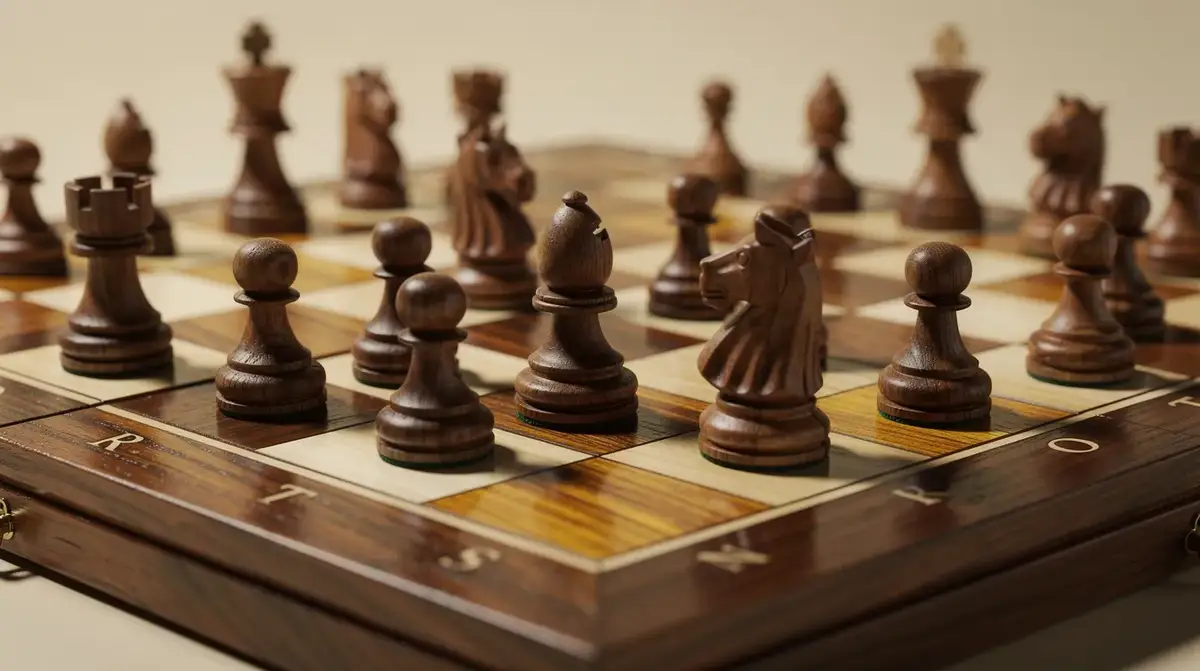
Pro tip: When you study a new opening, do not just memorize moves - identify the pawn structure that results and learn the standard plans for both sides. Our openings explorer shows you exactly which pawn structures arise from hundreds of opening variations, helping you understand the resulting positions rather than just memorizing move sequences.
How Do You Identify Pawn Weaknesses in Your Position?
Pawn weaknesses are structural flaws that give your opponent a long-term target to attack and restrict your piece activity. The five most important types of pawn weaknesses are doubled pawns, isolated pawns, backward pawns, hanging pawns, and pawn islands.
Doubled Pawns
Doubled pawns occur when two pawns of the same color land on the same file. They cannot protect each other and one of them is often permanently weak. After a move like ...Bxc3 followed by bxc3, White has doubled c-pawns. However, doubled pawns are not always bad - they can control important central squares and open files for rooks. The isolated doubled pawn is generally the most problematic version.
Isolated Pawns
An isolated pawn has no friendly pawns on adjacent files to protect it. It must be defended entirely by pieces, which ties those pieces down. A pawn on d5 with no pawns on c or e files is a classic isolated pawn. The square directly in front of an isolated pawn is called a blockade square - placing a piece there (especially a knight) is often a devastating positional strategy.
Backward Pawns
A backward pawn cannot be safely advanced because the square in front of it is controlled by enemy pawns, and it has no friendly pawns behind or beside it to support a push. The pawn on d6 in many Sicilian Dragon positions is a classic backward pawn. The square directly in front of it (d5 in this case) becomes a powerful outpost for enemy pieces.
Pawn Islands
A pawn island is a group of pawns separated from other friendly pawns by empty files. The fewer pawn islands you have, the more cohesive and coordinated your pawn structure. Three pawn islands are generally considered a significant weakness in an endgame. World Champion Jose Raul Capablanca was famous for reducing his pawn islands and converting such endgame advantages with clinical precision.
Common trap: Many players create pawn weaknesses willingly in exchange for piece activity, but then fail to use that activity before the position simplifies. A weakness only remains tolerable as long as you maintain concrete compensation. Once pieces come off the board and the game heads toward an endgame, those structural flaws become decisive. Always have a plan to generate counterplay before trading pieces when carrying a structural disadvantage.
How Should You Use Pawn Structure to Decide Where to Attack?
You should attack on the side of the board where you have a pawn majority or spatial advantage. The pawn structure directly points to the correct side of the board for your attack, and ignoring this signal is one of the most common strategic mistakes among club players.
This principle can be broken down into three practical rules:
- Attack where you have more space. If your pawns on the kingside extend further than your opponent's, that is where your attack belongs. More space means more room to maneuver pieces and build pressure.
- Attack where you have a pawn majority. Three pawns versus two on one side of the board gives you a potential passed pawn. That majority should be advanced in the endgame and used to create pressure in the middlegame.
- Open files toward your opponent's weaknesses. If your opponent has a backward pawn on d6 and you can open the d-file with a timely pawn exchange, your rooks suddenly become devastating. The pawn structure tells you which files to fight for.
The Classic Minority Attack Example
In the Carlsbad structure, White has two queenside pawns (a and b pawns) against Black's three (a, b, and c pawns). White's plan is to push b4-b5, exchange on c6, and create a backward or isolated c-pawn for Black to defend. This is called the minority attack - using fewer pawns to attack a larger majority and create a weakness. It is a textbook example of using pawn structure to generate a concrete plan.
When the Center Is Closed
When the center is locked with pawns - as often happens in the King's Indian Defense after moves like e4, d5, e5 - both sides should attack on their respective wings. Black attacks on the queenside with c5-c4, while White attacks on the kingside with f4-f5. Whoever breaks through first usually wins. Understanding that the pawn structure demands this kind of wing play prevents the common mistake of attacking in the wrong direction.
Before launching any attack, check where your pawn majority is. That side of the board is where your pieces should be heading. Fighting against the direction indicated by your pawn structure wastes time and usually leads to a worse position.
How Does Pawn Structure Affect Which Pieces to Keep and Which to Trade?
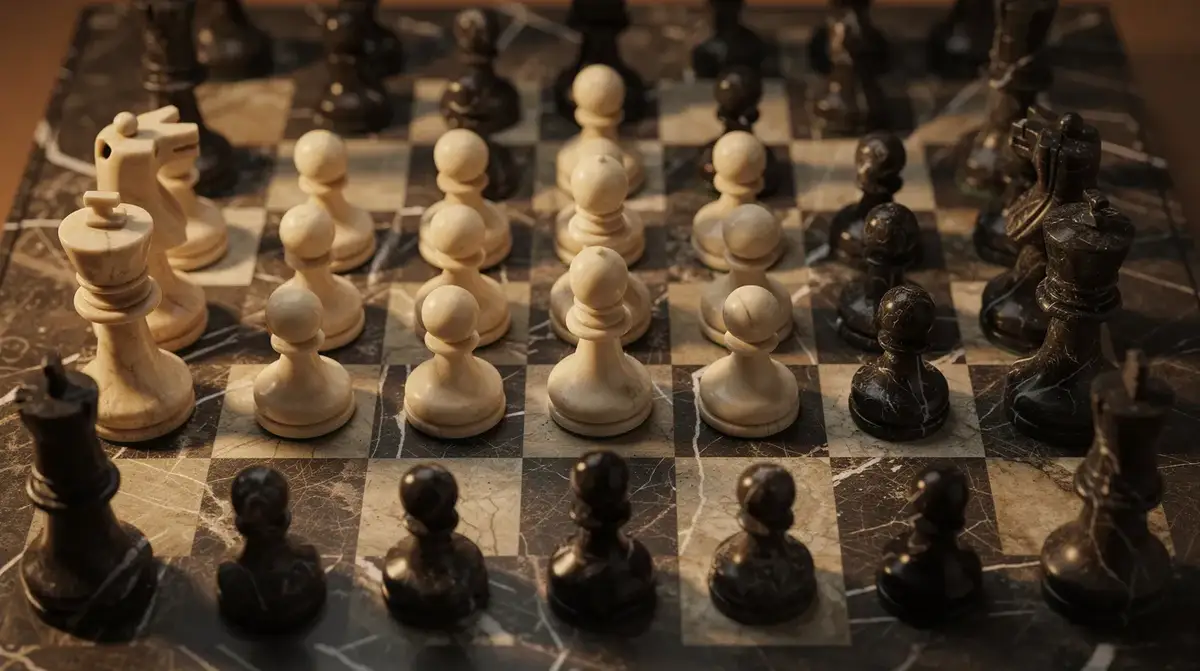
Pawn structure determines piece values more than almost any other factor. A bishop that is blocked by its own pawns on the same color squares is worth far less than a knight controlling a strong outpost, even though bishops are theoretically worth slightly more than knights.
Good Bishops vs. Bad Bishops
A "good bishop" is one that is not blocked by its own pawns. If your pawns are fixed on light squares, your light-squared bishop is a "bad bishop" - constantly obstructed and unable to exert influence. Converting your bad bishop into your opponent's bad bishop, or trading it for a good piece, is an important strategic goal. In closed positions with fixed pawn chains, this distinction can decide entire games.
Knights Love Outposts
An outpost is a square that cannot be attacked by enemy pawns. Knights placed on outposts - particularly those deep in the opponent's half of the board - become enormously powerful. A knight on d6, supported by a pawn on e4 and with Black having no c or e pawns to challenge it, is often worth more than a rook in such positions. Pawn structure creates and destroys outposts, so every pawn exchange changes the value of the pieces on the board.
Rooks Need Open Files
Rooks are only activated on open or half-open files. Before you can use your rook effectively, you need to understand which files will open based on likely pawn exchanges. If you have a half-open e-file because your opponent traded on e4, your rook on e1 is already well-placed. Recognizing these patterns before they happen is the sign of a genuinely strategic player.
Pro tip: After every game, use a game analyzer to examine your pawn structure decisions. Look specifically at moments where you exchanged pawns - did those exchanges help or hurt your piece activity? Did you create weaknesses you later had to defend? This kind of self-examination accelerates improvement faster than almost anything else.
How Does Pawn Structure Change Your Endgame Planning?
Pawn structure becomes even more critical in the endgame because pieces come off the board and there is nowhere to hide structural weaknesses. A pawn weakness that was manageable in the middlegame with active piece play can become a fatal flaw once queens and rooks disappear.
The Passed Pawn - Your Most Valuable Asset
A passed pawn is one with no opposing pawns to stop it from queening. Creating a passed pawn is the primary strategic goal in many endgames. The further advanced a passed pawn, the more dangerous it becomes - an opponent often needs to sacrifice material to stop it. The famous chess proverb captures this perfectly:
"A passed pawn must be pushed!" - Nimzovich's rule - reminding players that a passed pawn must advance before it can realize its full potential.
King Activity and Pawn Structure
In the endgame, the king becomes a fighting piece. The pawn structure determines where the king should march. If you have a passed pawn on the queenside, your king should head there to support it. If your opponent has scattered pawns across multiple islands, your king should aim to attack the most vulnerable one. Every endgame king journey is guided by the pawn map on the board.
The Outside Passed Pawn
An outside passed pawn on the a or h file in a king-and-pawn endgame is often a decisive advantage. You advance it to lure the enemy king to the edge of the board, then switch your king to the opposite side to collect the real pawns. This technique only works because the pawn structure forces a specific king journey - understand the structure and you understand the technique.
If you want to practice these concepts in real positions, the endgame training section on our platform covers over 30 classic endgame positions specifically designed to build this kind of structural thinking.
How Can You Practice Pawn Structure Concepts Effectively?
You can practice pawn structure understanding most effectively through three activities: studying model games with clear structural themes, solving puzzles that involve strategic pawn decisions, and playing practice games against opponents who force you to handle structural complexity.
Study Model Games
Pick five games by Capablanca, Karpov, or Petrosian - three of the greatest structural players in history - and focus exclusively on pawn structure. Ask yourself before each move: what does the pawn structure suggest? Which side should each player attack? What weaknesses exist and how are they being exploited? This kind of targeted game study builds pattern recognition far faster than passive reading.
Solve Structural Puzzles
Tactical puzzles train your calculation, but strategic puzzles train your judgment. Look for puzzles that ask "what is the best plan?" rather than just "find the winning move." Practice identifying backward pawns, recognizing minority attack opportunities, and spotting outposts for pieces. Our chess puzzles and tactics trainer includes tactical themes like discovered attacks and deflections that often arise directly from pawn structure - for example, winning a backward pawn through a pin or using a passed pawn's advancement to create a tactical combination.
Play Against Bots with Distinct Playing Styles
One of the best ways to test your structural understanding is to play against opponents who consistently exploit weaknesses. Our human-like chess bots are trained on real human games and each have a distinct playing personality. The Defensive Bot, for example, will patiently accumulate small structural advantages and squeeze you in a manner very similar to how top positional players operate. Playing against it teaches you to defend structures under pressure - an underrated but essential skill.
Pro tip: After each practice game, spend three minutes reviewing your pawn structure decisions specifically. Did your pawns create good outposts for your pieces? Did you correctly identify which side to attack? This focused review habit, even without a full analysis engine, will dramatically sharpen your structural awareness within a few weeks.
Common trap: Players often study tactics heavily but completely neglect pawn structure, then wonder why they cannot convert winning endgames or why their attacks run out of steam. Tactics win individual moves - pawn structure wins entire games. Balance your study by dedicating at least 30% of your learning time to positional and structural concepts.
What Are the Most Important Pawn Structure Rules Every Chess Player Should Know?
There are six fundamental pawn structure rules that every chess player from beginner to intermediate level should internalize. Apply these consistently and your strategic decision-making will improve immediately.
- Avoid unnecessary pawn moves in the opening. Every pawn push in the opening weakens squares. Limit your opening pawn moves to those that develop pieces, control the center, or serve a specific strategic purpose. The general guideline is two or three pawn moves maximum in the first ten moves.
- Control the center with pawns on e4-d4 or e5-d5. Central pawns give your pieces the most space and the most options. Ceding the center to your opponent without fighting for it is one of the most common strategic errors among beginners.
- Do not create weaknesses without concrete compensation. Before you push a pawn and leave a backward square behind it, ask yourself: what am I getting in return? If the answer is "nothing specific," reconsider the move.
- Attack on the side where you have more space or a majority. This rule alone will help you find good plans in almost any position.
- Blockade your opponent's passed pawns. Place a piece directly in front of a passed pawn to stop it from advancing. The blockader - ideally a knight - ties down the pawn and becomes enormously powerful.
- Trade your bad bishop for a good piece. If your bishop is permanently blocked by your own pawns, look for opportunities to exchange it. A bishop that cannot move is often worse than a knight in the same position.
Understanding pawn structure does not require calculating fifteen moves ahead. It requires asking one question before every move: does this help my pawns support my pieces, or does it create a weakness I will have to defend for the rest of the game?
How Do You Put Pawn Structure Knowledge Into Practice in Real Games?
Putting pawn structure knowledge into practice requires building a simple pre-move habit: before every move, spend five seconds looking at the pawn structure and asking what it tells you. With repetition, this becomes automatic and your game will improve measurably.
Here is a four-step process you can apply during any game:
- Map the pawn structure. Count pawn islands for both sides. Identify any doubled, isolated, or backward pawns. Note which side of the board each player has more space.
- Find the weaknesses. Which pawn is hardest to defend? Which square cannot be protected by pawns? These are your targets or the things you need to protect.
- Identify the best pieces for this structure. Are your bishops good or bad? Do you have an outpost for a knight? Which files should your rooks be on?
- Build a plan. Now that you understand the structure, you know where to attack, which pieces to keep, and what your opponent is likely to do. Your plan is not random - it flows directly from the position.
This process takes time at first, but with practice it becomes second nature. Using the learn chess with AI feature is an excellent way to practice this analytical thinking in an interactive setting, where the AI can highlight key squares and show you how structural factors influence every decision.
Pawn structure is not just an advanced concept for strong players - it is the foundation of all strategic thinking in chess. Understanding five basic structures, recognizing common weaknesses, and knowing where to attack based on pawn placement will immediately make you a stronger, more confident player at any level.
Frequently Asked Questions About Pawn Structure in Chess
Is pawn structure more important than tactics?
Pawn structure and tactics work together, not against each other. Tactics decide individual moves and combinations, while pawn structure determines the long-term character of the position. However, for players between 1000 and 1600 rating, improving pawn structure awareness often produces faster results because most games at that level are decided by accumulating strategic advantages rather than pure tactical fireworks.
Should beginners worry about pawn structure?
Yes, even beginners benefit enormously from basic pawn structure awareness. You do not need to know every advanced structure - just two rules will help immediately: avoid doubling your own pawns unnecessarily, and try to keep pawns connected rather than scattered across isolated islands. For a comprehensive start, the beginner chess school on our platform covers these fundamentals in an accessible, practical way.
What is the best pawn structure in chess?
There is no universally "best" pawn structure because every structure has different strengths and weaknesses depending on the position. The healthiest general principles are: few pawn islands, no backward pawns, connected pawns supporting each other, and at least some central presence. The "ideal" structure is the one that best supports your pieces and restricts your opponent's pieces in the specific game you are playing.
How do I remember all the different pawn structures?
Do not try to memorize all structures at once. Instead, learn one structure per opening you play. If you play the Queen's Gambit as White, learn the Carlsbad structure. If you play the Sicilian as Black, learn the typical Sicilian structures. Over time you will naturally build a library of structural knowledge tied directly to positions you encounter in real games.
Can a bad pawn structure be compensated by piece activity?
Yes, absolutely. Dynamic compensation - active pieces, attacking chances, an initiative - can outweigh structural weaknesses as long as the activity continues. The key danger is that activity is temporary while pawn weaknesses are permanent. If you simplify into an endgame with a bad pawn structure and no piece compensation, you will almost certainly lose. Great players like Mikhail Tal accepted bad structures regularly but maintained such fierce piece activity that the weaknesses rarely had time to matter.
Pawn structure is the language that chess positions speak. Learning to read it means you will always have a plan, always know where your pieces belong, and always understand what your opponent is trying to do. Start your next game with one simple question: what does my pawn structure tell me? Then follow that answer and watch your results improve. Ready to put these concepts into practice? Explore our openings explorer to see how your favorite openings create specific pawn structures, or jump into the endgame training section to practice converting structural advantages into wins. The best chess players are not always the best calculators - they are the ones who understand their pawns.