
A backward pawn is one of the most misunderstood weaknesses in chess. Many players panic when they realize they have one, but strong players know how to turn this structural challenge into a dynamic weapon. In this guide, you will learn exactly what a backward pawn is, why it creates pressure for both sides, how to exploit your opponent's backward pawn, and how to neutralize your own. Let's transform this weakness into your competitive edge.
What Exactly Is a Backward Pawn in Chess?
A backward pawn is a pawn that cannot be defended by another pawn and sits on a half-open file, meaning the opponent can place a rook or queen directly in front of it. Specifically, a pawn is backward when both neighboring pawns on adjacent files have already advanced past it, leaving it unable to advance safely without being captured, and no friendly pawn can move up to protect it from behind.
Imagine White has pawns on e4 and g4, but the f-pawn is still sitting on f2. The f2 pawn has no pawn companions that can come to its defense from behind, the e4 and g4 pawns have marched ahead, and Black can plant a piece on f4 or press with a rook along the f-file. That is the classic backward pawn scenario.
The Three Conditions That Define a Backward Pawn
- The pawn's neighboring pawns on adjacent files are further advanced
- The square directly in front of the backward pawn is controlled or occupied by the opponent
- No friendly pawn can advance to defend it from behind
The most famous recurring example in tournament chess is the d6 pawn in the Sicilian Defense. After 1.e4 c5 2.Nf3 d6 3.d4 cxd4 4.Nxd4 Nf6 5.Nc3, Black frequently ends up with a pawn on d6 flanked by pawns on e7 and c5 that march forward while d6 lags behind. White immediately targets the d6 square with pieces, placing a knight on d5 and stacking rooks on the d-file.
Pro tip: Before calling a pawn "backward," always verify all three conditions. A pawn on d3 with a neighboring pawn still on c2 is NOT backward because c2 can advance to c3 and support it. Misidentifying the weakness leads to incorrect plans.
Why Is a Backward Pawn Such a Serious Weakness?
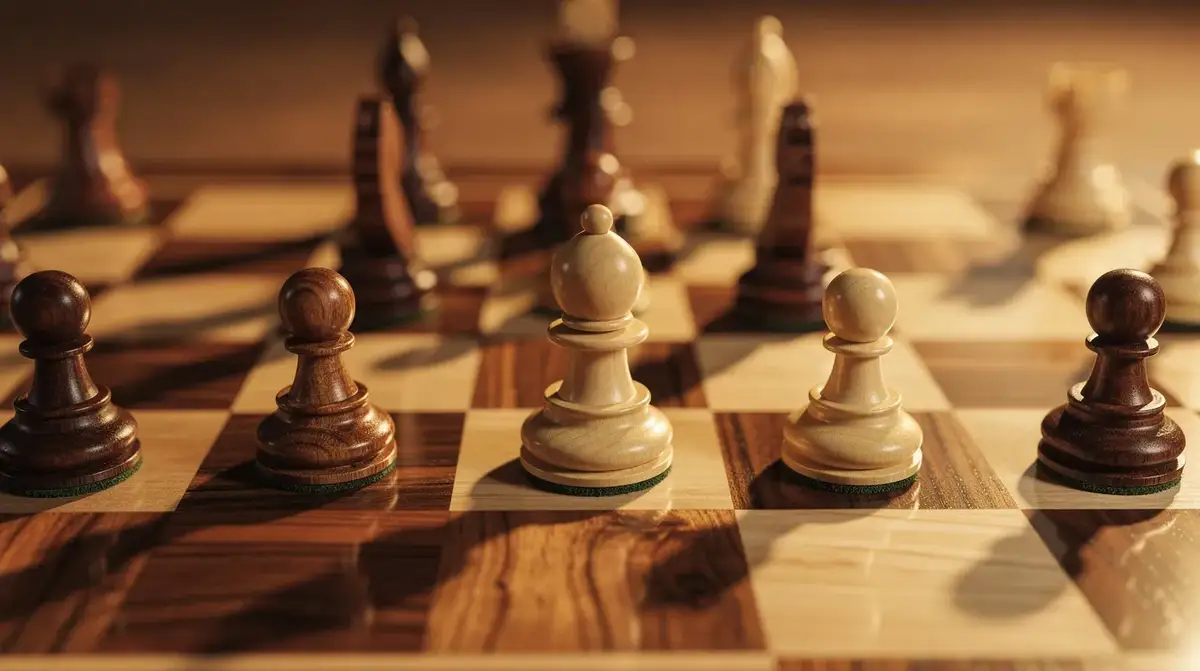
A backward pawn is serious because it creates two connected problems at once: the pawn itself is a fixed target that cannot run, and the square in front of it becomes a permanent outpost for the opponent's pieces. This double burden drains your position of flexibility and forces you into passive defense.
Let's break down precisely why grandmasters treat backward pawns with such concern:
The Fixed Target Problem
Unlike an isolated pawn, which at least sits on a closed file sometimes, a backward pawn almost always sits on a half-open file. That means the opponent can double or even triple heavy pieces - rooks and the queen - directly against it. The pawn cannot move away. It is a stationary target that demands constant piece attention to defend.
The Outpost Problem
The square directly in front of a backward pawn is often a dream outpost. If your pawn is on d6, the d5 square in front of it becomes a fortress for the opponent's knight or bishop. Because your backward pawn can never advance to kick the piece away, the outpost piece sits permanently. A knight on d5 in such a structure often single-handedly dominates the entire board.
For a deeper look at how outposts work in practice, read our article on Chess Knight Outposts: Dominate the Board. The relationship between backward pawns and knight outposts is one of the most important strategic ideas in positional chess.
A backward pawn creates two permanent problems: a fixed target on a half-open file AND a strong outpost square for the opponent directly in front of it. You must address both problems simultaneously, not just one.
The Piece Activity Problem
Defending a backward pawn forces your pieces into passive roles. A rook on d8 staring at its own backward pawn on d6 is not attacking anything. A bishop on e7 shielding the d6 pawn is not doing its best work. The backward pawn acts like a ball and chain on your entire piece coordination. This is why strong players prefer to sacrifice the pawn for active counterplay rather than defend it passively for 40 moves.
"In chess, a weakness is not just a weakness in itself - it is a weakness because of what it forces your pieces to do. A backward pawn turns your army into a garrison." - Classical positional chess principle
How Do You Attack an Opponent's Backward Pawn Effectively?
You attack a backward pawn by first occupying the square in front of it with a strong piece, then doubling heavy pieces on the half-open file, and finally applying pressure until the defender either loses material or is forced into a losing endgame. This is a three-step process that mirrors Nimzowitsch's principle of blockade, pressure, and destruction.
Step 1 - Occupy the Square in Front of the Pawn
Place your most powerful piece on the square directly in front of the backward pawn. A knight is ideal because it cannot be chased away by another pawn (since the backward pawn cannot advance). A bishop or rook on that square can also be excellent. The key is that this piece becomes your anchor for the entire attack.
For example, if Black has a backward pawn on d6:
- White places a knight on d5 - this piece is untouchable by Black's pawns
- White maneuvers a second knight to f4 or e3 to support the d5 knight and add pressure
- White places a rook on d1 pointing directly at d6
- White doubles rooks on the d-file if possible
Step 2 - Create a Second Weakness
The most critical strategic concept when exploiting a backward pawn is Steinitz's principle: one weakness is often not enough to win. You need to create a second weakness to divide the defender's attention. While your opponent is busy defending d6, launch a pawn advance on the kingside or create pressure on a different file. When they move pieces to handle the second threat, you capture the backward pawn.
Pro tip: After establishing your knight on the outpost square, look for a way to open a second front. A pawn advance like h4-h5 on the kingside, or pressure on the queenside with a4-b4, often cracks the defense because your opponent simply runs out of pieces to cover everything.
Step 3 - Convert in the Endgame
Backward pawns are often most vulnerable in the endgame when there are fewer pieces to defend them. Trade off the defender's most active pieces, especially knights that could create counterplay, and simplify into a rook or queen endgame where your rook on the d-file dominates. Once you win the backward pawn, you typically have a passed pawn or a favorable majority that decides the game.
For concrete endgame conversion techniques, our guide on Passed Pawn Strategy: How to Win Chess Endgames covers exactly what to do once you win the pawn and need to convert the advantage.
How Do You Play With Your Own Backward Pawn Without Losing?
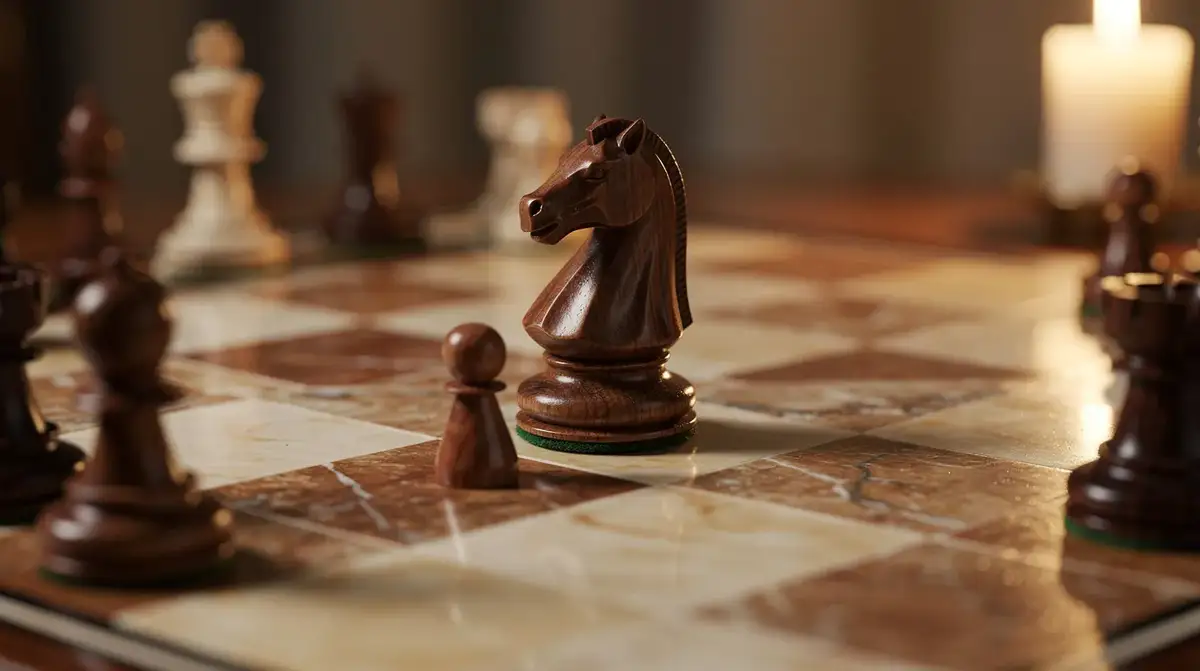
You neutralize your own backward pawn by generating active piece play and counterattacking pressure elsewhere on the board, preventing the opponent from occupying the outpost square in front of your pawn, and looking for the right moment to advance the backward pawn even at the cost of a pawn sacrifice. Passive defense almost always loses; active counterplay is your survival strategy.
Strategy 1 - Prevent the Outpost Occupation
Your first priority is to stop the opponent from planting a piece on the square in front of your backward pawn. If your pawn is on d6, do everything you can to prevent a white knight from landing permanently on d5. This might mean keeping a bishop on c6 or e6 that controls d5, or using your own knight to challenge any piece that approaches.
Strategy 2 - Generate Active Counterplay Immediately
This is the most important principle. Do not simply sit and defend. Launch an attack or open a different part of the board. If White is pressuring your backward d6 pawn, start a kingside attack with f5-f4 or queenside pressure with b5-b4. Keep White busy so they cannot focus all resources on d6. Many Sicilian Defense games follow exactly this pattern - Black accepts the backward d6 pawn but generates tremendous kingside activity to compensate.
Common trap: Many club players defend their backward pawn by piling all their pieces onto it passively. This is almost always wrong. Your pieces become completely inactive, your opponent simply creates a second weakness, and you lose without ever getting a chance to fight back. Always seek counterplay first.
Strategy 3 - The Pawn Sacrifice to Liberate Your Position
Sometimes the best treatment for a backward pawn is to sacrifice it deliberately for active piece compensation. If you can push d6-d5 and sacrifice the pawn in exchange for opening lines, activating your bishops, and getting your rooks into the game, that trade is often well worth it. This is a classic theme in the Sicilian Defense and the King's Indian. A temporary pawn deficit with active pieces often gives much better practical chances than passive long-term defense.
Understanding when to sacrifice for activity is closely connected to the broader art of piece coordination. Our detailed guide on How to Master Piece Coordination in Chess explains how to measure whether your piece activity truly compensates for a material deficit.
When you have a backward pawn, passive defense is your enemy. Fight for the outpost square, generate counterplay on a different part of the board, and be willing to sacrifice the pawn for active piece compensation when the moment is right.
Which Chess Openings Commonly Produce Backward Pawns?
The Sicilian Defense, the French Defense, the King's Indian Defense, and the Caro-Kann are the openings most likely to produce backward pawn structures. Understanding the backward pawn dynamics in your specific opening system is essential for playing those positions correctly at every phase of the game.
The Sicilian Defense - The d6 Backward Pawn
The most studied backward pawn structure in chess arises from the Sicilian Defense. In many Sicilian lines, Black ends up with a backward pawn on d6 flanked by the e7 and c5 pawns. White's entire strategy often revolves around placing a knight on d5 and pressing the d-file. Black counterattacks on the queenside with b5-b4 or launches a kingside attack. This dynamic tension is what makes the Sicilian the most popular and complex opening in modern chess.
The French Defense - The e6 and d5 Complex
In the French Defense after 1.e4 e6 2.d4 d5, Black frequently ends up with the "French bishop" problem and backward pawn tendencies depending on which variation arises. In the Advance Variation (3.e5), Black's c-pawn and d-pawn structure requires careful handling to avoid creating a permanent backward pawn target.
The King's Indian Defense - Dynamic Pawn Sacrifices
In the King's Indian Defense, both sides frequently have backward or lagging pawns depending on which central pawn break occurs. Black's d6 pawn can become backward after e4-e5, but Black's piece activity and kingside attack typically provide full compensation. These are sharp, double-edged positions where pawn structure takes a back seat to piece dynamics.
If you want to explore how different opening choices shape pawn structures and backward pawn scenarios in your own games, our openings explorer shows you the most likely pawn structures arising from each opening line, helping you prepare for the specific strategic challenges ahead of time.
Pro tip: Before playing any opening regularly, study the typical pawn structures it produces. If you know that your favorite Sicilian variation gives you a backward d6 pawn in many lines, you can study those positions specifically and arrive at the middlegame with a ready-made plan instead of improvising from scratch.
How Is a Backward Pawn Different From an Isolated Pawn or Doubled Pawns?
A backward pawn differs from an isolated pawn because the backward pawn still has neighboring pawns on adjacent files - they have simply marched ahead of it - while an isolated pawn has no neighboring pawns at all on either adjacent file. The backward pawn is potentially less weak than an isolated pawn in some respects but creates a unique outpost problem that isolated pawns do not always generate.
Backward Pawn vs. Isolated Pawn
With an isolated pawn (IQP), your pawn has no neighbors at all, which means you cannot create an outpost in front of it using neighboring pawns. The IQP is permanently isolated but the square in front of it is sometimes harder to blockade permanently. With a backward pawn, the neighbors exist but have advanced, meaning the square in front of your backward pawn is often extremely stable as an outpost because your own structure prevents you from challenging it.
For an in-depth comparison and strategy guide for isolated pawns, read our article on Isolated Pawns in Chess: Turn the IQP Into a Weapon.
Backward Pawn vs. Doubled Pawns
Doubled pawns are two pawns of the same color on the same file, creating a different kind of structural weakness. The key difference is that doubled pawns sometimes provide open files for rooks as compensation, while a backward pawn provides the opponent with both a target AND an outpost. In many positions, having doubled pawns is preferable to having a backward pawn precisely because of this double-problem nature.
Our comprehensive guide on Doubled Pawns: How to Play the Structure and Win explores how to handle that structure effectively and when it becomes an asset rather than a liability.
Backward pawns are the most strategically complex pawn weakness because they simultaneously create a target and gift the opponent an outpost. An isolated pawn is weak; a backward pawn is a structural problem that reshapes piece placement for both sides across the entire board.
What Are the Best Endgame Principles for Backward Pawn Positions?
In endgames featuring a backward pawn, the side without the weakness should trade pieces to reduce defensive resources, activate the king as an attacking force toward the backward pawn, and create a passed pawn on the opposite side of the board to force the defender into a two-front crisis. The defender must keep pieces active and seek pawn breaks that eliminate the structural weakness entirely.
For the Side Attacking the Backward Pawn
- Trade off your opponent's most active pieces, especially knights that could create forks or counterattack your king
- Centralize your king aggressively - in king-and-pawn endgames, the king targeting a backward pawn is often a winning technique
- Create a passed pawn on the opposite flank to stretch the defender's resources
- Use your rook to support the king's advance while also controlling the promotion square of your future passed pawn
- Never release the pressure - once you have the backward pawn under siege, every exchange should improve your position
For the Side Defending the Backward Pawn
- Avoid trading into pure king-and-pawn endings where your backward pawn is the decisive weakness
- Look for a pawn break that eliminates the backward pawn at the cost of pawns elsewhere - accepting doubled pawns or an isolated pawn is often better than keeping the backward pawn
- Keep rooks on the board to generate counterplay and counterattack threats
- Activate your king early and do not let it become passive
- Seek opposite-colored bishop endings when possible - these are famous drawing weapons even with a material deficit
For specialized endgame training on these exact scenarios, our platform's endgame training module includes pawn structure endgames across three difficulty tiers where you can practice defending and converting backward pawn positions until they become second nature.
In endgames, the attacking side should simplify and centralize the king toward the backward pawn while creating a second passed pawn threat. The defending side should avoid pure pawn endings, keep rooks active, and seek pawn breaks that transform the structural weakness into something more manageable.
Can a Backward Pawn Ever Become a Strength?
Yes - a backward pawn can become a strength when it supports an advanced passed pawn, controls key squares that outweigh its own weakness, or becomes the trigger for a powerful central pawn break that opens the position favorably. This transformation requires precise timing and active piece play, but it is one of the most satisfying strategic themes in chess.
The Backward Pawn as a Springboard
In some positions, the backward pawn is preparing a future advance that will shake the entire structure. For example, a pawn on d3 that appears backward might suddenly lunge to d4 at the right moment, smashing open the center and activating all your pieces simultaneously. Grandmasters deliberately place pawns in "backward" positions temporarily to prepare this kind of explosive central break.
The Backward Pawn That Controls Key Squares
A backward pawn on e3 controls the d4 and f4 squares even while sitting behind its neighbors. If those squares are important outpost locations for your own pieces, the "backward" pawn is actually serving a vital structural function. The pawn structure should always be evaluated in context of what squares it controls and supports, not simply by counting its weaknesses in isolation.
Common trap: Players often evaluate pawn weaknesses in isolation without considering the full position. A backward pawn on d6 is a serious weakness in a closed, maneuvering game. The exact same pawn structure in a wide-open game with active piece play might be perfectly acceptable or even favorable. Always evaluate pawn weaknesses relative to piece activity, not in a vacuum.
Practical Example - Transforming the Weakness
Imagine Black has a backward pawn on d6 in a Sicilian structure, but has managed to place a bishop pair controlling both diagonals, a knight on e5 ready to jump to c4, and a rook on the half-open c-file. White's pieces are awkwardly placed defending the backward d5 outpost pawn and the c3 knight is passive. Suddenly Black plays d6-d5 sacrificing the pawn to open the d-file and activate the bishop pair. The compensation is more than sufficient because piece activity dominates over the structural weakness.
This kind of dynamic pawn sacrifice thinking connects directly to broader attacking concepts. Our article on How to Sacrifice Pieces in Chess and Win More Games covers the decision-making process behind calculating whether activity truly compensates for material.
Frequently Asked Questions About Backward Pawns
Is a backward pawn always a weakness?
No. A backward pawn is a potential weakness but not an automatic one. It becomes a genuine weakness only when the opponent can effectively target it with heavy pieces and occupy the square in front of it with a strong piece. If you can prevent both of those things, the backward pawn may be perfectly acceptable or even part of your plan.
Should I advance my backward pawn as soon as possible?
Not necessarily. Prematurely advancing a backward pawn often makes things worse if the advance hands your opponent a powerful piece on the outpost square or opens lines against your king. You should advance the backward pawn only when it genuinely improves your position - either by opening lines for your pieces or by eliminating the structural weakness at an acceptable cost.
How do I recognize when my opponent has a backward pawn?
Look for a pawn that is behind both of its neighboring pawns on adjacent files and sits on a half-open file. Then ask: can any friendly pawn come to defend it? If the answer is no and the square in front of it can be controlled by your piece, you have found a backward pawn to target. This is the kind of pattern recognition that improves dramatically with puzzle training.
Our chess puzzles and tactics trainer includes positional puzzles that train exactly this kind of structural pattern recognition, helping you spot backward pawn targets quickly and accurately in your own games.
What is the best piece to place on the square in front of a backward pawn?
A knight is almost always the best piece because it cannot be chased away by the backward pawn itself. A knight on d5 in front of a backward d6 pawn is practically immovable. Bishops and rooks on that square are also strong but more vulnerable to being challenged by other pieces. The knight outpost in front of a backward pawn is one of the most powerful positional assets in chess.
How does pawn structure connect to my opening choice?
Your opening choice directly determines which pawn structures you will face. Players who study pawn structures systematically alongside their openings gain a massive strategic advantage because they know their plans before the middlegame even begins. Our comprehensive Pawn Structure: How to Plan Your Chess Strategy guide connects opening choices to middlegame and endgame plans through specific structural families.
How Can You Practice Backward Pawn Strategy Effectively?
You practice backward pawn strategy most effectively by studying master games featuring specific structures like the Sicilian d6 pawn, analyzing your own games to identify backward pawn moments you missed, and playing practice games specifically designed to explore these structures. Theory without practice produces knowledge but not skill.
Use the Game Analyzer to Find Your Mistakes
After your games, review them specifically looking for moments where backward pawns arose. Did you correctly identify them? Did you execute the right plan? Our game analyzer classifies your moves and flags missed strategic opportunities, including pawn structure decisions, so you can pinpoint exactly where your backward pawn handling went wrong and study the correct plan.
Play Against Bots That Challenge Your Strategy
Practicing backward pawn positions against a bot that actually understands positional chess is far more useful than playing against an engine that calculates brute force. Our human-like chess bots are trained on real human games and play with genuine strategic personalities - the Practical Hunter and Defensive Bot in particular will challenge your pawn structure handling in ways that feel like real opponent pressure.
Study Related Pawn Structures Systematically
Backward pawns do not exist in isolation. Understanding how they relate to hanging pawns, isolated pawns, passed pawns, and pawn majorities gives you a complete strategic picture. Our related guides - including How to Play Chess With Hanging Pawns and Win - are part of the same structural strategy series that builds your positional chess from the ground up.
For a complete structured approach to improving your chess with daily puzzles and endgame training combined, our chess learning course for puzzles and endgames provides a progressive curriculum that includes structural pattern recognition as a core component.
You now have the complete framework for handling backward pawns: identify them correctly, exploit your opponent's with the three-step blockade-pressure-convert method, defend your own with active counterplay rather than passive defense, and recognize when a backward pawn can be transformed into a strength. The next step is to put this knowledge into practice. Analyze your recent games for backward pawn moments, study the Sicilian d6 structure in master games, and jump into our endgame and puzzle trainers to drill these positions until they become instinct. Every strong positional player has mastered backward pawn strategy - now it is your turn.