
A passed pawn is one of chess's most powerful weapons - and also one of the most misunderstood. Many players create a passed pawn and then watch it get blockaded or exchanged away, leaving nothing to show for their effort. In this guide, you will learn exactly what a passed pawn is, how to support and advance it correctly, how to break through blockades, and how to convert that extra pawn into a full point. Let's turn your pawns into queens.
What Exactly Is a Passed Pawn in Chess?
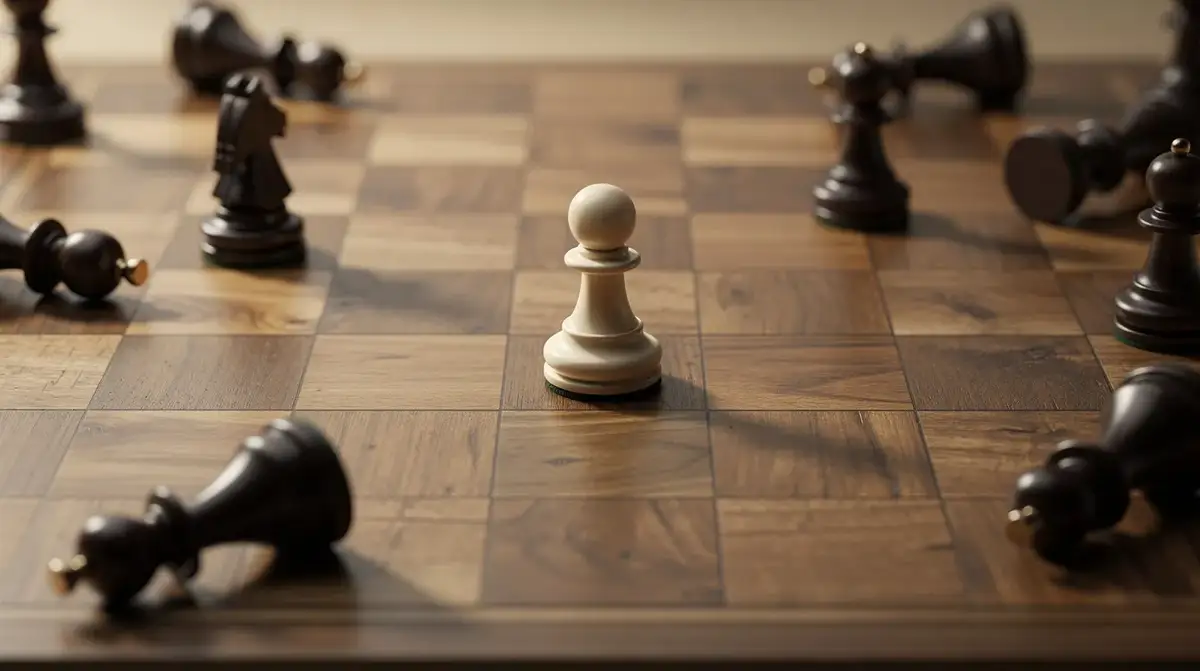
A passed pawn is a pawn that has no opposing pawns blocking its path to promotion - neither directly in front of it nor on the adjacent files. Because no enemy pawn can stop it from marching forward, a passed pawn creates a permanent, long-term advantage that your opponent must address with pieces, costing them tempo and activity.
Here is the technical definition that most beginners miss: a pawn on e5 is not passed if White has pawns on d6 or f6, even though those pawns are not directly in front. The key test is whether any opposing pawn occupies the pawn's file or either adjacent file ahead of it.
Types of Passed Pawns You Need to Know
- Simple passed pawn - A single pawn with a clear path to promotion. Example: White pawn on e5, no Black pawns on d6, e6, or f6.
- Protected passed pawn - A passed pawn defended by another pawn. This is the most dangerous type because the opponent cannot simply capture it without losing material.
- Connected passed pawns - Two passed pawns on adjacent files. These are almost impossible to stop in an endgame and are considered decisive in most positions.
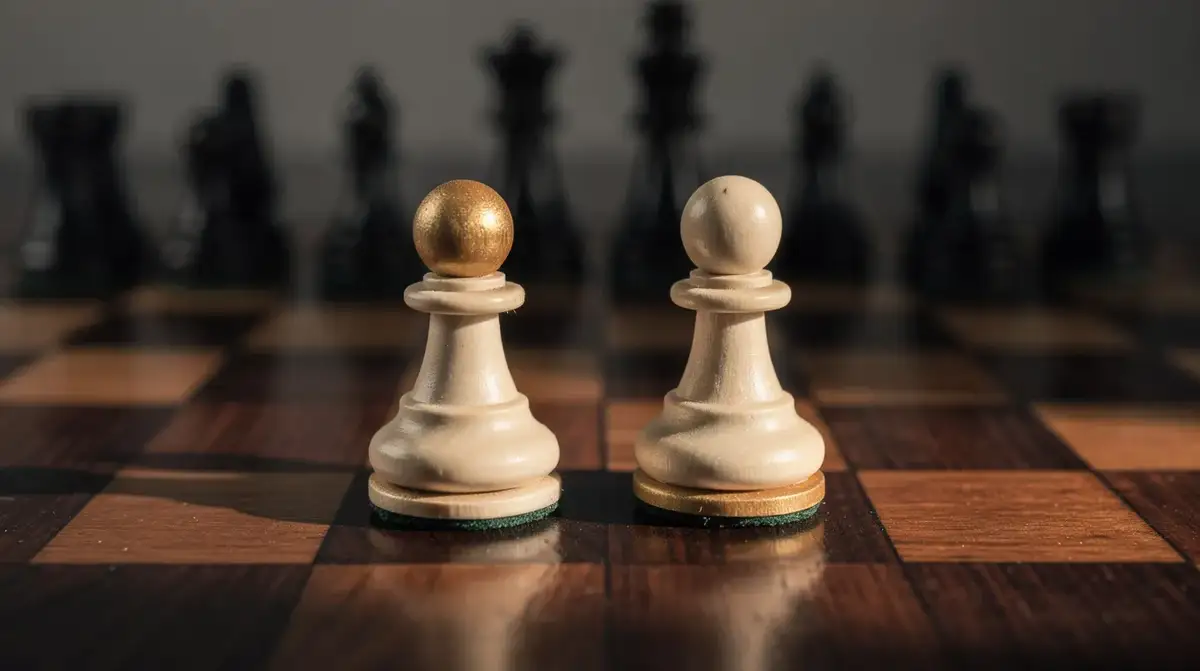
- Outside passed pawn - A passed pawn on the flank, far away from the main action. This pawn acts as a decoy, pulling the opponent's king to the wrong side of the board.
- Candidate pawn - A pawn that could become passed after a series of pawn exchanges. Identifying candidates early is a key middlegame skill.
Pro tip: When evaluating a position, always check which side has passed pawns or pawn majority that can create one. This structural advantage often outweighs temporary material or activity differences, especially in the endgame.
How Do You Create a Passed Pawn From Scratch?
You create a passed pawn by advancing your pawns to force trades until one of your pawns has no opposing pawns on its file or adjacent files ahead. The most reliable methods are pawn majorities, pawn breaks, and strategic piece pressure that forces your opponent to exchange the wrong pawns.
The Pawn Majority Method
A pawn majority means having more pawns on one side of the board than your opponent. For example, if White has three pawns on the queenside (a, b, c) versus Black's two (a, b), White can advance and create a passed pawn on the c-file after the correct trades. The formula is simple: push the pawn your opponent cannot attack, force exchanges, and the remaining pawn becomes passed.
- Identify which side of the board you have more pawns.
- Advance the pawn that your opponent cannot easily attack first.
- Force the exchange of the blocking pawns.
- The survivor becomes your passed pawn.
Creating a Passed Pawn With Pawn Breaks
A pawn break is when you advance a pawn to attack your opponent's pawn chain at its base or weakest point, forcing a structural change. Classic breaks include c4-c5 in Queen's Gambit structures, f4-f5 in King's Indian formations, and d4-d5 in many central battles. After the break and subsequent trades, a passed pawn often emerges.
Understanding pawn structure is the foundation here. For a deeper look at how pawn breaks fit into broader strategy, read our guide on Pawn Structure: How to Plan Your Chess Strategy.
The best time to plan for a passed pawn is before you have one - in the opening and middlegame, evaluate your pawn majority and look for pawn breaks that will leave you with an unstoppable passer in the endgame.
How Should You Play With a Passed Pawn in the Middlegame?
In the middlegame, your passed pawn is most valuable as a threat rather than something you immediately advance. The pawn ties down your opponent's pieces to blockade it, freeing your own pieces to become active on other parts of the board.
The Principle of Restraint - Advance at the Right Moment
Nimzowitsch famously wrote that a passed pawn has a lust to expand. But that lust must be controlled. Premature advancement often leads to the pawn being blockaded or lost. In the middlegame, use your passed pawn to:
- Tie down enemy pieces. Your opponent must keep a knight or rook on the blockade square, reducing their attacking options.
- Create space advantage. A passed pawn on d5 controls c6 and e6, restricting your opponent's knights and bishops.
- Threaten promotion to win material. Even if the pawn never queens, the threat forces defensive concessions.
- Support piece activity. Your rooks, bishops, and knights coordinate more easily with a strong central passer behind them.
Rooks Behind Passed Pawns - The Golden Rule
Always place your rooks behind passed pawns, not in front of them. A rook behind a passed pawn on d5 controls d6, d7, and d8 from a distance, supporting every step of the advance. A rook in front of the pawn blocks its own path and provides zero support.
This concept connects directly to rook activity and endgame conversion. Our dedicated guide on How to Play Rook Endgames and Convert Your Advantage covers this in full detail.
"The rook belongs behind the passed pawn - whether it is yours or your opponent's." - Siegbert Tarrasch, one of the greatest chess teachers of the 19th century.
Pro tip: If your opponent has the passed pawn, also place YOUR rook behind it. This limits the pawn's advance and turns a passive rook into an active blocker. A rook in front of an enemy passed pawn is a terrible defensive position.
How Do You Break Through a Blockade on Your Passed Pawn?
Breaking a blockade requires either removing the blockading piece directly, deflecting it with a tactical shot, or outflanking it with your king in the endgame. The knight is the worst blockader because it is the only piece that cannot be attacked from a distance by a rook or bishop, making it the hardest to dislodge.
Why Knights Are the Best Blockaders
A knight on d6 blocking a White passed pawn on d5 is nearly immovable. It attacks two squares ahead and cannot be harassed by the d5-pawn itself. To remove a knight blockader, you typically need to:
- Attack it with your bishop or queen, forcing it to move.
- Use a pawn lever on an adjacent file to undermine its support square.
- Trade it off with your own knight even at the cost of the exchange.
- In endgames, use your king to approach and chase it away.
Breaking Through With a King March
In king and pawn endgames, the king becomes your strongest piece. The winning technique is to march your king toward the blockading piece while your passed pawn advances. The famous "King outflanks the blockade" technique works as follows: if Black's king is on d6 blocking a White pawn on d5, White marches Kc4-Kb5-Ka6 to threaten promotion from the a-file, forcing Black's king to abandon the d6 blockade.
This technique is closely linked to the concept of zugzwang, where forcing your opponent to move loses them the blockade. Learn more about forcing decisive positions in our article on Chess Zugzwang: Force Winning Positions Every Time.
Common trap: Many players advance their passed pawn immediately when the opponent's king is nearby, only to see it blockaded permanently. Remember - advance the pawn only when you have cleared the blockading piece or your king is close enough to escort it to promotion. A premature push can turn a winning advantage into a dead draw.
When Should You Use an Outside Passed Pawn as a Decoy?
You should use an outside passed pawn as a decoy when your opponent's king must travel far to stop it, allowing your own king to invade the main part of the board and win the remaining pawns. This is one of the most decisive and elegant techniques in all of chess endgames.
How the Outside Passed Pawn Decoy Works
Imagine White has pawns on a5 (passed) and e5, while Black has pawns on e6 and f7. White's king is on d4. Black's king must go to a8 to stop the a-pawn from promoting. But while Black's king races to the queenside, White's king marches e5-f6-g7 and gobbles up all of Black's kingside pawns. By the time Black captures on a8, White is already queening on the kingside.
- Create or identify your outside passed pawn far from the main pawn cluster.
- Advance it toward promotion to force your opponent's king to respond.
- March your own king in the opposite direction, toward the undefended pawns.
- Win those pawns and create a new passer - or simply promote first.
The Outside Passed Pawn vs. Connected Pawns
Connected passed pawns do not need this decoy trick - they support each other and advance together. Two connected passers on the 6th rank beat a rook, which is why reaching that stage is essentially decisive. The priority is always: connected passers are the strongest, outside passers are next, and isolated passers are the hardest to convert.
The outside passed pawn wins not by promoting directly, but by pulling the enemy king off the critical squares, giving your king free access to the rest of the board. Always calculate how many moves it takes each king to reach the critical area before committing to this plan.
How Do You Convert a Passed Pawn to Victory in the Endgame?
Converting a passed pawn to victory requires three coordinated steps: activate your king as an attacking piece, place your rooks behind the passer, and time the advance carefully so the pawn cannot be blockaded or captured before it queens. Piece coordination is the difference between converting and throwing away a winning position.
Step 1 - Activate the King Immediately
In the endgame, your king is not a liability - it is a weapon. The moment queens and most pieces are traded, centralize your king with Ke2-Kd3-Kc4, approaching the passed pawn from behind to support its advance. A king on c5 supporting a d5-passer is dramatically stronger than a king passively sitting on g1.
Step 2 - Use the Lucena and Philidor Positions
Two essential rook endgame positions define pawn conversion:
- Lucena position - Your rook and pawn are advanced, king sheltered, and you "build a bridge" by using your rook to shield the king from checks. This is the fundamental winning technique in rook endgames with a passed pawn.
- Philidor position - The defending side uses the rook to cut off the attacking king and then shift to back-rank checks once the pawn advances to the 6th rank. Knowing this as the defender lets you save half points. Knowing it as the attacker means you avoid walking into it.
Step 3 - Calculate the Square Rule for Pawn Races
In pure king-and-pawn endings, use the "square rule" to instantly calculate if a king can catch a passed pawn. Draw a square from the pawn to the queening square. If the opposing king can enter that square on its turn, it can catch the pawn. If not, the pawn promotes unassisted. This calculation takes two seconds and eliminates entire branches of calculation.
For a complete breakdown of endgame conversion techniques, our in-depth post on How to Win Chess Endgames: Essential Techniques covers every essential method you need.
Pro tip: Practice the Lucena and Philidor positions until they become automatic. These two patterns appear in a huge percentage of rook endgames. Players who know them by heart convert winning positions that others draw repeatedly. Use our endgame training module to drill these positions against an AI opponent.
What Are the Most Common Mistakes When Playing With a Passed Pawn?
The most common mistake is advancing the passed pawn too early, turning it into a target instead of a weapon. The second most common mistake is neglecting king activity while focusing entirely on the pawn's advance. Both errors can transform a winning advantage into a draw or even a loss.
Mistake 1 - Rushing the Advance Without Support
A passed pawn on d7 with no rook behind it and an enemy rook on d8 is not a winner - it is trapped. Always verify that your rook controls the d-file from behind (on d1 or d2) before committing the pawn to d7 where it can be blockaded for the rest of the game.
Mistake 2 - Ignoring Counterplay on the Other Wing
Your opponent will try to generate counterplay with their own pawn advances while you march your passer. Many games are lost because White is so focused on queening on the queenside that they forget Black is promoting on the kingside one move faster. Always check pawn race tempos. If your opponent queens with check, you lose.
Mistake 3 - Allowing the Wrong Piece Trade
Trading your active bishop for your opponent's passive knight when you have a passed pawn is often a mistake. Bishops are excellent at supporting passed pawns from a distance because they can guard the queening square while remaining far from danger. Before trading any piece, ask: does this trade bring my pawn closer to promotion or does it make the blockade easier?
Common trap: Do not exchange your good bishop for a knight or bad bishop when you hold a passed pawn. The bishop's long-range influence is essential for escorting the pawn to promotion. Many players execute this trade automatically and then find the resulting knight endgame is a dead draw because the knight blockades perfectly.
Avoiding these mistakes requires sharp calculation skills. Our article on Calculate Chess Moves Further Ahead Without Blundering gives you the systematic thinking process needed to verify your passed pawn advances before committing.
Before advancing your passed pawn, always verify three things: your rook is behind it, your king is active, and your opponent has no faster counterplay on the opposite wing. Missing any one of these points can turn a full point into a half point - or worse.
How Does Passed Pawn Play Connect to Openings and Pawn Structure?
Passed pawns do not appear by accident - they are the result of deliberate pawn structure decisions made as early as move 5 or 6 of the opening. Understanding which openings give you long-term pawn advantages is the foundation of strategic chess planning.
Openings That Commonly Create Passed Pawns
- The isolated queen's pawn (IQP) - After 1.d4 d5 2.c4, many positions lead to an isolated d4-pawn for White. While this pawn is not yet passed, it can become one after central exchanges. The IQP position is a perfect study case for dynamic pawn play. See our dedicated article on Isolated Pawns in Chess: Turn the IQP Into a Weapon.
- The Catalan Opening - White's queenside pawn majority can generate a passed c or b pawn in the endgame.
- King's Indian Defense - Both sides often race passed pawns on opposite wings (White's queenside c-pawn vs. Black's kingside f-pawn), creating some of the sharpest races in chess.
- The Sicilian Defense - After 1.e4 c5, Black's queenside pawn majority frequently generates a powerful passed c-pawn in the endgame.
To understand how these opening choices translate into long-term pawn advantages, explore our openings explorer which shows you move probabilities and structural outcomes from thousands of real games.
Frequently Asked Questions About Passed Pawns
Is a passed pawn always a winning advantage?
No - a passed pawn is a long-term advantage, but it must be supported correctly. A blockaded passed pawn that ties down your own pieces is sometimes more of a weakness than a strength. A passed pawn is only decisive when you have the pieces to escort it to promotion.
Can a passed pawn be dangerous for the side that has it?
Yes. In the middlegame, an overextended passed pawn deep in enemy territory without support can become a target. Your opponent can blockade it and use the weakened squares around it to post their own pieces. Always evaluate whether advancing gives your opponent more counterplay than the pawn advance is worth.
What is the difference between a passed pawn and a candidate pawn?
A candidate pawn is one that could become passed after a series of pawn trades on adjacent files. It has opposing pawns in its way but could eliminate them. Identifying which pawn in a pawn majority will become the candidate passer is a key strategic skill in the middlegame.
How do I practice passed pawn technique?
The best way to improve your passed pawn technique is through dedicated endgame practice and game analysis. Our endgame training section includes over 30 classic positions focused specifically on pawn conversion, king activity, and the Lucena and Philidor methods. You can also review your own games using our game analyzer to identify where you missed passed pawn opportunities or mishandled them.
Which pieces work best with a passed pawn?
Rooks and bishops are the best supporting pieces for passed pawns. The rook belongs behind the pawn on the same file. The bishop excels at guarding the queening square from a distance. Knights are weaker supporters because they need to be close to the pawn and cannot cover long distances quickly. Queens combined with passed pawns are almost always immediately decisive.
How Can You Practice Passed Pawn Conversion Right Now?
You can practice passed pawn technique right now by working through dedicated endgame positions, solving pawn-based tactical puzzles, and playing against bots designed to test your endgame precision. The fastest improvement comes from active practice, not just reading about concepts.
Here is a structured practice plan:
- Day 1-2: Learn the Lucena and Philidor positions. Play through them 10 times each until you can execute them blindfolded.
- Day 3-4: Practice the square rule with king-and-pawn endings. Set up positions where your passed pawn is just inside and outside the square and verify your calculations.
- Day 5-6: Study outside passed pawn decoy positions. Set up a king-and-pawn position with an outside passer and play it against our human-like chess bots which play realistic endgame moves, not engine perfection.
- Day 7: Analyze 3-5 of your own games to find positions where you had or could have created a passed pawn. Use our game analyzer to see where your play diverged from the best approach.
For deeper structural and strategic understanding of all pawn types, our full How to Play Positional Chess When No Tactics Exist article connects passed pawn strategy to the broader picture of long-term planning.
You can also build on this knowledge with a structured curriculum by exploring the chess learning course for puzzles and endgames, which combines daily tactical training with the endgame fundamentals needed to convert every winning position.
A passed pawn is not a victory by itself - it is a promise. To cash in that promise, you need to activate your king, place your rooks correctly, neutralize blockades, and time the advance precisely. Every one of these skills can be drilled with focused practice. Head over to our endgame training module, test your technique against the AI, and start turning your passed pawns into full points. The endgame is where preparation meets precision - and now you have both.