


The queenside attack is one of chess's most powerful strategic weapons, yet many players neglect it entirely. If your opponent has castled queenside, or if the position simply favors an expansion on the a, b, and c files, knowing how to build and execute a queenside attack can transform your game completely. In this guide, you will learn the key ideas, plans, pawn breaks, and piece placements that make queenside attacks devastating.
What Exactly Is a Queenside Attack in Chess?
A queenside attack is a strategic plan where you advance your pawns and pieces on the a, b, and c files to create threats against the opponent's king or to win material on that side of the board. Unlike a kingside attack that often aims for immediate checkmate, a queenside attack can be used to generate long-term pressure, open files for your rooks, and exploit weaknesses in the opponent's pawn structure.
The queenside attack works in two main scenarios. First, when your opponent has castled queenside and their king sits on c8, b8, or a8, advancing your own pawns on that flank directly threatens the king's safety. Second, even when both kings have castled kingside, a queenside pawn advance can create passed pawns, open the b or c file for your rooks, or win space that eventually becomes decisive.
Understanding this distinction is critical. A queenside attack is not always about checkmating the king. Sometimes it is purely positional, but the resulting structural advantages are just as winning.
"Chess is not about attacking the king or the queenside. Chess is about choosing the correct plan for the position. But when the queenside is the right plan, it must be executed with energy and precision." - inspired by the thinking of Tigran Petrosian
For a broader view of how attack choices interact with pawn structure, see our guide on Pawn Structure: How to Plan Your Chess Strategy.
When Should You Launch a Queenside Attack?
You should launch a queenside attack when you have a space advantage on that side, your opponent's king is on the queenside, or your pawn structure naturally supports a b4-b5 or a4-a5 advance. Attacking on the wrong side of the board is one of the most common strategic mistakes at the club level.
The Three Key Conditions for a Successful Queenside Attack
- Your opponent has castled queenside - This is the most urgent trigger. If your opponent's king is on the queenside, every tempo you spend expanding there is potentially a direct attack on the king.
- You have a queenside pawn majority - If you have three pawns against two on the queenside (for example, pawns on a2, b2, and c4 against their b7 and c5), you can push for a passed pawn that will cost your opponent dearly.
- Open or half-open files favor your rooks on the queenside - If the b-file or c-file is open or can be opened, doubling rooks there creates enormous pressure. Our article on How to Play Chess With Rooks on Open Files and Win explains exactly how to exploit this.
Pro tip: Always attack on the side where you have more space. A general rule from Nimzowitsch says that you should attack on the flank where your pawns point. If your pawns are pointing toward the queenside, that is where your pieces should be heading too.
When Not to Attack the Queenside
If your own king is on the queenside and the position is not yet fully closed, advancing queenside pawns can expose your own king to counterattacks. Similarly, if your opponent has a powerful knight centralized on d4 or e5, a queenside pawn storm can actually help them because advancing b2-b4 removes a pawn that was protecting the c3 square.
Common trap: Many players advance b2-b4 too early, before their pieces are coordinated behind the attack. A premature b4 advance with nothing behind it can simply leave you with a weak pawn on b4 that your opponent attacks with a5-a4 or c5-c4, collapsing your entire structure.
How Do You Set Up a Queenside Attack Step by Step?
Setting up a queenside attack requires three phases: preparation (getting your pieces to the right squares), the pawn break (typically b4-b5 or c4-c5), and the exploitation (using the opened files and weaknesses you created). Skipping any phase leads to a failed attack.
Phase 1 - Preparation
Before you push a single queenside pawn, your pieces need to be ready. Here is the ideal setup:
- Place a rook (or two) on the b-file or c-file, even before they are open. The rooks prepare to pour through once the files open.
- Put your queen on a square where it can support the advance and switch to the kingside if needed (c2 or b3 are common).
- Get your knight to c3 or d2, from where it can jump to b5 or a4 after the break.
- Secure your own king. If you are about to open the position on the queenside, make sure your king is safely castled kingside first.
Phase 2 - The Pawn Break
The most common queenside pawn breaks are:
- b2-b4 and then b4-b5 - This is the classic break against a fixed pawn on a6 or c6. When b5 is played, it either opens the b-file (if bxc6 or bxa6) or creates a powerful passed pawn.
- a2-a4 and then a4-a5 - Often used in combination with b4-b5 to create a pawn roller. The a4-a5 advance can lock the queenside if your opponent has played ...a5, and then b4-b5 becomes even stronger.
- c4-c5 - In many IQP positions or structures from the Queen's Gambit, c4-c5 is the key break that gains space and restricts the opponent's pieces. See our article on Isolated Pawns in Chess: Turn the IQP Into a Weapon for more on when this works.
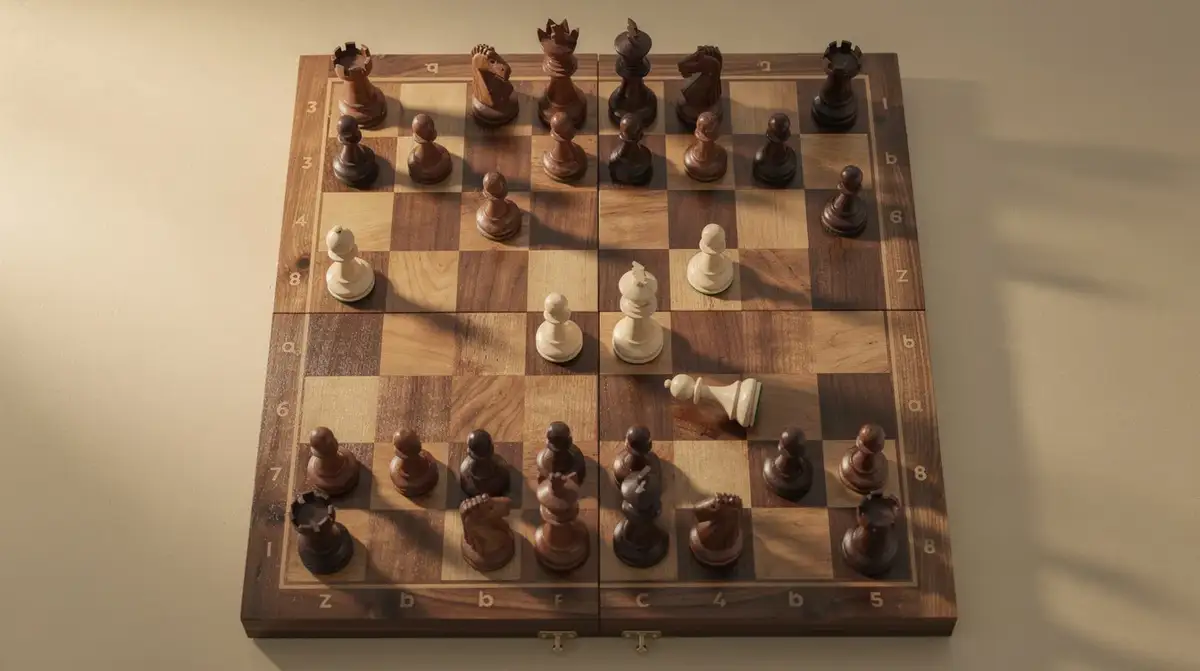
Phase 3 - Exploitation
Once your break lands, look for these follow-up ideas:
- Double rooks on the newly opened b-file or c-file.
- Use a knight posted on b5 or a5 to restrict the opponent's queenside counterplay.
- Create a passed pawn and escort it forward with your rooks behind it (for more on converting passed pawns, see Passed Pawn Strategy: How to Win Chess Endgames).
- Transfer your attack diagonally if the opponent's king got caught in the center.
A queenside attack has three phases: preparation (pieces behind the pawns), the break (b5, a5, or c5), and exploitation (open files, passed pawns, and attacking the king). Never launch the break before your pieces are ready.
Which Chess Openings Lead Naturally to Queenside Attacks?
Several major chess openings are specifically designed to give White or Black a queenside attack as the main strategic plan. Knowing these openings means you will arrive at queenside attack positions with a clear plan ready from move one.
The Queen's Gambit Declined - White's Classic Queenside Setup
After 1.d4 d5 2.c4 e6 3.Nc3 Nf6 4.Bg5, White often aims for a queenside minority attack after castling. White advances b2-b4-b5 with only two pawns against Black's three on the queenside. The goal is not to win immediately but to create a weak pawn on c6 after bxc6, giving Black a long-term structural disadvantage. Our dedicated article on the Minority Attack in Chess: Strategy Guide to Win covers this in full detail.
The Sicilian Defense - Black's Queenside Counter
In many Sicilian variations, Black counters White's kingside attack with a queenside attack of their own. After 1.e4 c5, Black's c-pawn already occupies c5, giving Black a space advantage on the queenside. In the Dragon and Najdorf variations especially, Black plays ...a5-a4 or ...b5-b4 to roll the queenside pawns forward while White attacks on the kingside. This creates the famous "race" positions where both sides attack on opposite wings.
The King's Indian Defense - queenside vs kingside
In many King's Indian lines (1.d4 Nf6 2.c4 g6 3.Nc3 Bg7 4.e4 d6 5.Nf3 O-O 6.Be2 e5), White's standard plan involves a queenside attack with c4-c5 and a queenside pawn majority, while Black attacks on the kingside. Learning to manage these double-edged positions is a great exercise in attack-versus-attack chess.
The Catalan and Queen's Indian
The Catalan Opening (1.d4 Nf6 2.c4 e6 3.g3) puts White's bishop on g2 pointing at the queenside, indirectly supporting a queenside pawn advance later. The long diagonal pressure combined with b2-b4 is a classic grandmaster plan.
To explore the opening theory behind any of these systems, try the openings explorer on our platform and trace how grandmasters have handled queenside positions from move one.
Pro tip: If you are new to queenside attacking ideas, start with the Queen's Gambit Declined as White. The piece placements are logical, the plans are clear, and you will quickly develop a feel for when and how to push b4-b5.
What Are the Most Important Piece Placements for a Queenside Attack?
The most important pieces in a queenside attack are rooks on open files, a knight on b5 or a5, and a queen positioned on the queenside to coordinate threats. Bishops pointing along the long diagonal (a1-h8 or a2-g8) also play a critical supporting role.
The Rook on b1 or a1
Before your b-file is open, place a rook on b1 anticipating it. When b4-b5 is played and the file opens, your rook is already there. Doubling rooks on the b-file, with one on b1 and one on b2 (or b3), creates enormous pressure on b7 and beyond.
The Knight Outpost on b5
A knight on b5 is extraordinarily powerful in queenside attack positions. It attacks d6 (a common weakness), cannot easily be driven away if the a-pawn has advanced past a6, and it controls c7, potentially threatening a fork. For more on how to build and use knight outposts in general, our article on Chess Knight Outposts: Dominate the Board covers everything you need.
The Queen on a4 or b3
Placing the queen on a4 or b3 supports the queenside advance and puts indirect pressure on d7 or b7. From b3, the queen also eyes the f7 pawn diagonally, giving it dual purpose. From a4, it pins a knight on c6 if there is one and eyes the d7 square.
Bishops on the Long Diagonal
Fianchettoed bishops on g2 or b2 are the invisible engines behind many queenside attacks. The bishop on b2 (or g2 in reverse) often only becomes decisive in the late middlegame or endgame when the position opens up. Hold back the bishop patiently; its time will come.

Rooks on b1/c1 (before the files open), a knight on b5, and a queen on a4 or b3 form the ideal queenside attack formation. Get these pieces in place before pushing the pawns forward.
How Do You Handle Your Opponent's Counterplay When Attacking the Queenside?
Your opponent's best response to a queenside attack is a central or kingside counterattack, and handling this correctly separates strong players from weak ones. The key principle is to ensure your king is safe and your center is stable before committing fully to the queenside.
The Central Counter
If you are advancing pawns on the queenside and neglecting the center, your opponent may play ...e5 or ...d5, opening the position explosively. Before launching b4-b5, always ask: "Can my opponent play a central break that punishes me?" If the answer is yes, either stop that break first or accept the complications knowing your pieces are better coordinated.
The Kingside Counter
In many double-wing attack positions (common in the Sicilian and King's Indian), both players advance on opposite sides. The rule here is simple: the faster attack wins. Do not slow down your queenside attack to "defend" the kingside unnecessarily. Instead, calculate whether your queenside threats arrive before their kingside threats do. If your attack is faster, press on. For ideas on how to handle a kingside counterattack against you, our article How to Defend Against Chess Attacks on Your King is essential reading.
Fixing the Queenside Before Attacking It
One strong technique is to "fix" your opponent's queenside pawns before attacking them. If your opponent has pawns on a7, b6, and c5, and you play a4, you prevent ...a5 and then launch b4-b5, the fixed pawn on b6 becomes a permanent target. Fixed pawns cannot defend themselves.
Common trap: Do not open the queenside when your king is also on the queenside and the position is not closed. Opening files next to your own king is dangerous unless your pieces dominate those files completely.
What Are Real Examples of Queenside Attacks That Win Games?
Real queenside attack patterns appear repeatedly in grandmaster games and can be directly applied at the club level once you recognize the key structures. Here are the most instructive patterns to study.
Pattern 1 - The b5 Breakthrough Against a Castled King
In a typical Sicilian position where Black has castled queenside, White plays a4-a5-b4-b5 with the goal of cracking open the b-file. The sequence often runs: a2-a4 (stopping ...a5 counterplay), then Rb1 (rook to b1), then b2-b4, and finally b4-b5 at the right moment. Once bxc6 or bxa6 is played, the b-file opens and the rook tears through. This is one of the most concrete and forcing queenside attacks you can execute.
Pattern 2 - The c5 Space Grab
In positions with a central pawn on d4 and a white pawn on c4, advancing c4-c5 when Black's d6-pawn is fixed is a classic grandmaster idea. After c5, White gains enormous space, the d6-pawn becomes a permanent target, and a knight on d4 or e4 can jump to b5 or d5 to dominate the position. This is particularly common in the English Opening (1.c4) and the Queen's Indian Defense.
Pattern 3 - The Queenside Pawn Majority in the Endgame
When the middlegame simplifies into an endgame where you have three pawns against two on the queenside, those extra pawns become a winning weapon. Push them forward, create a passed pawn, and use your rooks to support it from behind. For more on how this specific structure works, see our article on Queenside Pawn Majority: How to Play and Win.
Pattern 4 - The Exchange Sacrifice on c3
In some positions, sacrificing the exchange (rook for knight or bishop) on c3 to smash open the queenside is completely correct. For example, in certain Sicilian Dragon positions, Black plays ...Rxc3 to destroy White's pawn cover and open the c-file. This is an advanced but learnable idea. For a deeper look at the art of piece sacrifices, see How to Sacrifice Pieces in Chess and Win More Games.
The queenside is the side of strategy. It is where positions are built slowly, where plans take ten or fifteen moves to mature, and where the patient player is always rewarded.
Study these four patterns repeatedly: the b5 breakthrough, the c5 space grab, the queenside pawn majority endgame, and the exchange sacrifice on c3. Recognizing these patterns in your own games is the first step to executing them confidently.
How Can You Practice and Improve Your Queenside Attack Skills?
Improving your queenside attack skills requires deliberate practice: studying pawn structures, solving tactical puzzles that arise from open queenside files, and playing through grandmaster games that feature these ideas. The most efficient way to improve is to combine all three methods.
Study Pawn Structures First
The queenside attack always flows from the pawn structure. Before you can attack correctly, you need to understand which structures favor a queenside attack and which do not. Study the Sicilian structures, the Queen's Gambit structures, and the King's Indian structures. Each one has its own queenside plan embedded in it. The article on How to Play Positional Chess When No Tactics Exist gives a great framework for understanding structure-based plans.
Solve Tactics on Open Files
Many queenside attacks end in a tactical blow on the open b-file or c-file: a back-rank mate, a pin down the file, or a rook invasion on b7. Practice these patterns using the chess puzzles and tactics trainer. Focus specifically on back-rank mate patterns, pins along open files, and skewers - all of which appear regularly once a queenside attack has broken through.
Play Against Bots With Specific Personalities
One of the best ways to practice queenside attacks is to play against opponents with different defensive styles. Some opponents defend actively with counterplay, while others sit passively. Practice against both. The human-like chess bots on our platform are trained on real human games, so each bot handles your queenside pressure differently, just like a human opponent would. The Defensive Bot in particular is excellent for practicing how to break down stubborn queenside defenses.
Analyze Your Games After Playing
After every game where you attempted a queenside attack, use our game analyzer to review your decisions. Did you launch the break too early? Were your pieces coordinated? Did you miss a tactical opportunity once the files opened? Reviewing your own games with this kind of targeted analysis accelerates improvement faster than almost anything else.
Pro tip: When studying grandmaster games with queenside attacks, pause the game at the moment when you think the queenside break should happen. Predict the move, then check. Doing this repeatedly trains your pattern recognition far more effectively than just watching the moves play out.
What Are the Most Common Mistakes in Queenside Attacks?
The most common mistakes in queenside attacks are advancing pawns without piece support, neglecting the center before attacking, and missing the right moment for the critical break. Avoiding these mistakes requires discipline and patience.
Mistake 1 - Pushing Pawns Without Pieces Behind Them
This is the single most common error. Players see a queenside expansion opportunity and immediately push a4-b4-b5 without having rooks on the b and c files first. Without pieces behind the pawns, the break either fizzles out or creates weaknesses that the opponent exploits. Always get your pieces in position first.
Mistake 2 - Ignoring Central Tension
A queenside attack while your center is under threat is a recipe for disaster. If your opponent can play ...e5 or ...d5 and blow up your center, your queenside attack will not matter. Resolve central tension before going to the wings. This is a core principle of chess strategy and connects directly to the ideas in How to Play Chess With a Space Advantage and Win.
Mistake 3 - Playing the Break Too Late
Sometimes players prepare and prepare but never actually play the break. The opponent consolidates their position, repositions their pieces, and the opportunity window closes. When you have the break ready and the timing is right, play it. Initiative is time, and hesitation costs you both.
Mistake 4 - Forgetting the King's Safety
Queenside attacks often involve opening files and diagonals on that side of the board. If your king is on the queenside, this is dangerous. Always ensure your king is castled to safety (usually kingside) before launching the queenside attack. The concepts in Chess Tempo and Initiative: Dominate Every Game are directly relevant here.
How Does a Queenside Attack Compare to a Kingside Attack?
A queenside attack is generally slower and more strategic than a kingside attack, but it is often more decisive because the material and positional gains it creates are permanent. A kingside attack can misfire spectacularly if the king escapes; a successful queenside attack often wins material or creates an unstoppable passed pawn regardless of what the opponent does.
The key difference is the target. A kingside attack aims at checkmate. A queenside attack aims at structural weaknesses, material gain, and passed pawns - all of which can be just as decisive but through different means. For a full comparison of the two approaches, see our companion article How to Play Chess With a Kingside Attack and Win.
The best players are comfortable with both. They read the position, determine which flank offers more, and commit fully to that plan. Piece coordination plays a central role in both types of attacks - see How to Master Piece Coordination in Chess for ideas that apply to both kingside and queenside play.
How Can You Start Using Queenside Attack Ideas Today?
You can start using queenside attack ideas today by choosing one opening where the plan is clear (such as the Queen's Gambit for White), learning the standard pawn break in that structure, and focusing your first ten practice games entirely on building toward that break correctly. Focused practice on one idea beats scattered study across many ideas every time.
Here is a simple three-step action plan:
- Pick one opening - Choose a system where queenside play is natural (Queen's Gambit, English Opening, or the Sicilian as Black). Use the openings explorer to study how the queenside plans develop in that specific structure.
- Play training games with purpose - In each game, your only goal is to set up the queenside break correctly. Do not worry about winning immediately. Focus on the process: prepare the pieces, play the break at the right moment, and exploit the open files.
- Review every game - After each practice session, use the game analyzer to check your queenside decisions. Were the pieces ready? Was the break timed correctly? Did you follow through once the files opened?
Pro tip: Limit your study to one queenside attack structure for at least two weeks. Depth beats breadth when building chess intuition. After two weeks, the piece placements and break timings will start to feel automatic.
Before launching your queenside attack, verify: (1) your king is safe, (2) the center is stable or under your control, (3) at least one rook is on the b or c file, (4) your knight can jump to b5 after the break, and (5) your queen is supporting the advance from a4 or b3. If all five conditions are met, play the break with confidence and follow through energetically.
The queenside attack is one of chess's most reliable strategic weapons. It rewards patience, accurate piece placement, and structural understanding. Unlike tactical attacks that can misfire in a single move, a well-prepared queenside attack generates advantages that compound over time. The open files, the passed pawns, the weak squares left behind after the break - these are permanent features that give you a decisive long-term edge.
Start building these ideas into your game today. Study the structures, practice the breaks, and review your games honestly. The queenside attack is a skill that takes time to develop but, once mastered, gives you a concrete winning plan in a huge percentage of your games.