

A protected passed pawn is one of the most powerful positional weapons in chess. When you have a pawn that cannot be captured or blocked by enemy pawns - and that pawn is also defended by one of your own pieces - you hold a long-term advantage that can decide the entire game. In this guide, you will learn exactly how to create, protect, and convert a protected passed pawn into a full point.
What Exactly Is a Protected Passed Pawn in Chess?
A protected passed pawn is a pawn that has no enemy pawns in front of it on its own file or adjacent files, and is also defended by at least one of your own pawns or pieces. It combines two strengths at once: it cannot be stopped by enemy pawns, and it cannot be simply captured without cost. This double quality makes it far more dangerous than a regular passed pawn that your opponent can simply take.
To break this down clearly:
- A passed pawn has no opposing pawns on its file or the files next to it that could block or capture it as it advances.
- A protected passed pawn adds one more condition: it is guarded by another pawn (sometimes a piece), so your opponent cannot simply take it for free.
- The result is a pawn that ties down your opponent's pieces just by existing, while you use your free pieces to create threats elsewhere.
"A protected passed pawn is like a distant candidate - its mere presence exerts pressure without even moving. The opponent must always keep one eye on it, while you are free to attack wherever you choose." - classic positional chess principle
The classic example appears in the Isolated Queen's Pawn (IQP) structures. If White has a d5 pawn protected by a pawn on e4, while Black has no pawns on c, d, or e files to challenge it, that d5 pawn becomes a monster. You can read more about IQP strategy in our guide on Isolated Pawns in Chess: Turn the IQP Into a Weapon.
How Do You Create a Protected Passed Pawn in a Real Game?
You create a protected passed pawn by using pawn breaks, pawn exchanges, or piece pressure to force a pawn structure where one of your pawns advances past all opposing pawns while staying guarded by a neighbor. The most common methods are pawn advances on one side of the board combined with exchanges on the other side.
Method 1 - The Pawn Majority Advance
If you have a 3-vs-2 pawn majority on the queenside, you can often create a protected passed pawn by advancing carefully. For example, with pawns on a4, b4, and c4 against Black's pawns on a6 and b6:
- Push c4-c5 to attack the b6 pawn.
- After Black plays ...bxc5, recapture with bxc5, leaving you with pawns on a4 and c5 vs Black's pawn on a6.
- Now push a4-a5, and the c5 pawn is protected by a5 while a5 is protected by... the threat of c5-c6. Neither pawn can be easily removed.
For more on this type of structure, see our dedicated guide on Queenside Pawn Majority: How to Play and Win.
Method 2 - The Central Breakthrough
In closed or semi-closed positions, a pawn chain can be used to force a passed pawn. With pawns on e4, d4, and c4, pushing d4-d5 and then e4-e5 can create a protected passed pawn on e5 or d5 depending on how Black responds. This ties directly into understanding pawn chains - covered in depth at How to Play Chess With a Pawn Chain and Win.
Method 3 - Exchanging Into a Favorable Endgame
Sometimes you already have the structural ingredients. You simply need to trade off pieces that defend your opponent's blockading pieces, and suddenly your candidate pawn becomes a protected passed pawn. This is why piece coordination matters so much - you can explore that concept further in our article on How to Master Piece Coordination in Chess.
Pro tip: Always ask yourself before creating a passed pawn - is it protected? An unprotected passed pawn can become a target itself. Spend one extra move making it untouchable before you start using it as a weapon.

Why Is a Protected Passed Pawn So Powerful in the Endgame?
A protected passed pawn is so powerful in the endgame because it acts as a permanent, self-sustaining threat that forces your opponent to tie down at least one piece to stop its promotion, while your king and remaining pieces operate freely. This asymmetry of attention - you attacking everywhere, your opponent defending one critical square - is often decisive.
Here is why this matters in concrete terms:
- It cannot be blockaded for free: Blockading a regular passed pawn costs one piece. Blockading a protected passed pawn is still costly because taking it loses material.
- It gains in value as pieces come off: The fewer pieces on the board, the more powerful the pawn becomes. In a pure king and pawn ending, a protected passed pawn on the 6th rank is almost always a win.
- It supports an outside passed pawn: If you also have an outside passed pawn, your opponent's king must choose which threat to meet, and will often fail to handle both.
- It enables zugzwang: A protected passed pawn on the 6th or 7th rank combined with good king placement can create zugzwang positions where any move your opponent makes worsens their situation. Check our guide on Chess Zugzwang: Force Winning Positions Every Time for deep examples.
In a rook endgame, an advanced protected passed pawn can tie the defending rook to blockade duty while your rook looks for activity elsewhere. Calculate the checking distance and king positions before assuming the advantage is winning.
How Do You Use a Protected Passed Pawn in the Middlegame?
In the middlegame, you use a protected passed pawn not primarily by pushing it, but by using it as a strategic anchor to dominate space, restrict your opponent, and support piece outposts. The threat of advancing it is often more powerful than actually advancing it too early.
Using It as a Piece Outpost
A protected passed pawn on d5, for example, creates a natural outpost on the d5 square for your pieces. A knight on d5 protected by the e4 pawn becomes almost indestructible if Black has no pawns left to kick it. This knight-plus-protected-passer combination is one of the most common winning patterns in positional chess. For more on knight outposts, visit Chess Knight Outposts: Dominate the Board.
Restricting Enemy Piece Activity
Your opponent's pieces must constantly work around your passed pawn. Their bishop on c8 is often blocked by their own pawn structure trying to stop your d5-d6 advance. Their rooks cannot easily occupy open files because of the pawn's potential advance. This positional restriction translates directly into better piece activity for you.
Launching a Flank Attack
Because your opponent is tied down responding to the passed pawn threat, you have extra tempos to launch a kingside attack or a queenside pawn storm. This is the classic "two-front war" advantage - your opponent cannot adequately defend both the passed pawn threat and your active piece play. For full details on this concept, see our guide on How to Play Chess With a Space Advantage and Win.
Common trap: Many players rush to advance a protected passed pawn in the middlegame when pieces are still on the board. Premature advancement can actually release the tension. If your d5 pawn is on d5 and your opponent must keep a piece on d8 or c6 to stop d6, that restriction is worth more than the pawn's advance. Only push it when the advance wins material or creates an unstoppable promotion threat.
What Is the Best Plan When You Have a Protected Passed Pawn?
The best plan when you have a protected passed pawn follows three phases: first, improve all your other pieces to their best squares; second, trade off your opponent's best defensive pieces while keeping your own active pieces; third, advance the pawn at the decisive moment when your opponent cannot stop it. This sequence is the foundation of protected passed pawn play.
Phase 1 - Improve Every Piece
Before thinking about pushing your pawn, ask this question for every piece: is it on its best possible square? Your king should march to a central position. Your rooks should find open or semi-open files. Your knights should reach outpost squares near the passed pawn. Only once every piece is optimized should you consider advancing.
- Centralize your king (especially in endgames).
- Place rooks on the file behind or beside the passed pawn (and on open files).
- Post knights on outposts created by the passed pawn's presence.
- Activate bishops to long diagonals pointing toward the enemy king or the promotion square.
Phase 2 - Trade the Right Pieces
You want to keep the pieces that support the pawn's advance and trade off the pieces your opponent uses to blockade or attack it. This typically means:
- Trade knights for bishops when the passed pawn is on a light square and your opponent's dark-squared bishop can easily blockade it.
- Keep your rooks - rooks are most effective behind passed pawns.
- Trade rooks only if the resulting king-and-pawn endgame is a straightforward win with your protected passer.
- Avoid trading your protected passer's supporting pawn - the one that makes it "protected" - without a very concrete reason.
Pro tip: The ideal piece to keep with a protected passed pawn on the queenside is your rook on the 7th rank. Place it on b7 or c7, and combine it with your king marching toward the passed pawn's promotion square. Your opponent's king will be paralyzed trying to meet both threats.
Phase 3 - Advance at the Right Moment
The right moment to push your protected passed pawn is when one or more of these conditions are met:
- The advance wins material immediately (a fork, a pin, or a winning capture).
- The advance creates a second passed pawn.
- You have neutralized all pieces that could stop the promotion.
- Advancing forces a zugzwang position.
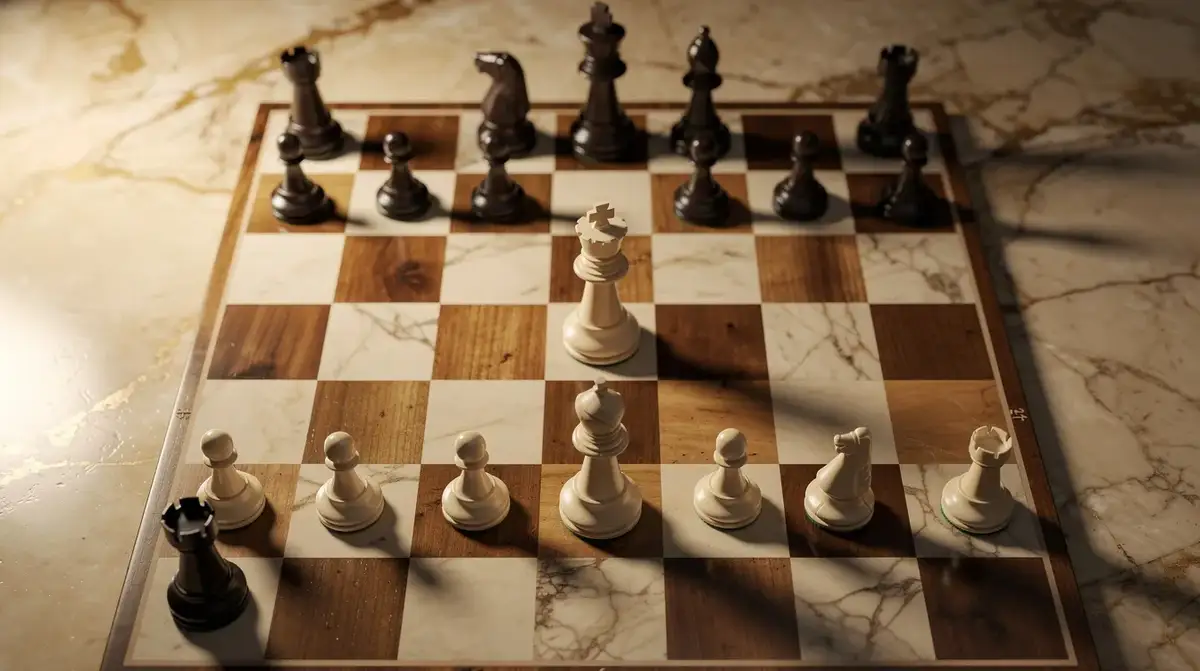
The three-phase approach - improve, trade, advance - applies whether you are playing in the middlegame or endgame. Skipping phase one and two in a rush to push the pawn is the single biggest mistake players make with a protected passed pawn.
How Do You Stop a Protected Passed Pawn When You Are on the Defending Side?
When defending against a protected passed pawn, your primary goals are to blockade it with your most passive piece, trade it off if possible without losing material, and create counterplay on the opposite side of the board. Passive defense alone almost never works - you must generate your own threats.
The Art of the Blockade
A blockader placed directly in front of the passed pawn neutralizes its advance. The best blockaders are knights (because they are not diminished by the pawn in front of them the way bishops and rooks are) and kings in the endgame. A knight on d6 in front of a White pawn on d5 is the classic defensive setup.
However, a protected passed pawn is harder to blockade than a regular passed pawn because your opponent can trade your blockading piece (since the passer's defender is also there). You need to have a second blockader ready or trade the passed pawn itself.
Counterplay Is Essential
If you simply sit and blockade, your opponent will improve all their pieces per phase one and two above, then eventually break through. You must create counterplay. Options include:
- Activating your own passed pawn on the other side of the board.
- Attacking your opponent's king before they can support their passed pawn's advance.
- Using piece activity to create tactical threats that force your opponent to abandon the passed pawn plan.
Common trap: Do not try to attack the pawn that protects the protected passed pawn (for example, the e4 pawn that defends a d5 passer). This plan often takes too long and just makes your opponent's pieces more active. It is almost always better to attack the passed pawn directly or create counterplay.
How Does a Protected Passed Pawn Work in Rook Endgames?
In rook endgames, a protected passed pawn is often the deciding factor because the defending side's rook must passively blockade it, while the attacking side's rook operates freely along the 7th rank or supports the pawn from behind. This piece activity imbalance is frequently enough to win the game.
The winning method in most rook endgames with a protected passed pawn follows this pattern:
- Place your rook behind the passed pawn (on d1 if your passer is on d5, aiming to push to d6 and then d7).
- Penetrate to the 7th rank with your rook (Rd7 or Rb7), attacking your opponent's pawns from behind.
- March your king toward the passed pawn to escort it forward.
- Force your opponent's rook to choose between defending their 7th rank pawns and blockading your passer.
Lucena's classic position and Philidor's defense are the foundational rook endgame techniques you need to master alongside this. Our comprehensive guide on How to Play Rook Endgames and Convert Your Advantage covers both in detail.
In rook endgames, the principle is simple: rook behind the passed pawn - always. This applies to both the attacker and the defender. The attacker puts their rook behind their passer; the defender puts their rook behind their opponent's passer to restrain it.
What Are the Most Common Mistakes Players Make With a Protected Passed Pawn?
The most common mistakes players make with a protected passed pawn are advancing it too early, trading the protecting pawn accidentally, neglecting piece improvement before pushing, and failing to create a second weakness to exploit alongside it. Avoiding these errors is what separates players who know the theory from players who actually win the games.
Mistake 1 - Advancing Too Early
Pushing d5-d6 when your opponent still has two active rooks and a knight defending is usually a blunder. The pawn reaches d6 and gets blockaded by a rook on d8 or a knight on d7, achieving nothing. Wait until the advance either wins material immediately or is genuinely unstoppable.
Mistake 2 - Losing the Protecting Pawn
If your passed pawn on d5 is protected by e4, losing the e4 pawn (whether through a trade or a blunder) transforms your monster pawn into a regular passed pawn that can now be targeted. Always keep one eye on the supporting structure.
Mistake 3 - Ignoring the Second Weakness
Even with a protected passed pawn, you often need a second weakness in your opponent's position to actually win. A passed pawn alone may be blockaded forever if your opponent has nothing else to defend. Create threats on the kingside while your passed pawn dominates the queenside - this forces your opponent to choose which fire to put out first. This connects to the fundamental ideas in How to Play Positional Chess When No Tactics Exist.
Mistake 4 - Neglecting Pawn Structure Elsewhere
Players so focused on their passed pawn often let their remaining pawn structure deteriorate. If you trade away your kingside pawns carelessly while advancing your queenside passer, your opponent may create their own counterplay that negates your advantage. Always keep the whole board in mind when working with structural advantages, a principle explored fully in Pawn Structure: How to Plan Your Chess Strategy.
A protected passed pawn is a long-term advantage that rewards patient, methodical play. Rushing it kills the advantage. Improving pieces, maintaining the protection, and creating a second weakness will convert it far more reliably than pushing prematurely.
How Can You Practice and Improve Your Protected Passed Pawn Technique?
You can improve your protected passed pawn technique by studying classic endgame positions, solving tactical puzzles that involve passed pawn themes, and playing against training partners or AI bots that challenge your endgame conversion skills. Deliberate practice with these specific structures accelerates improvement faster than general play.
Here is a practical training plan:
- Study classic games: Look at Capablanca, Petrosian, and Fischer endgames - these players were masters of the protected passed pawn technique. Their games are the best textbook available.
- Solve endgame studies: Our endgame training module includes 30+ classic positions across three difficulty tiers, with several focused directly on passed pawn technique.
- Practice against AI: Use our human-like chess bots to practice converting passed pawn advantages. The Endgame Challenger bot is specifically designed to test your endgame technique with realistic human-like resistance.
- Analyze your games: After playing a game where you had or faced a protected passed pawn, run it through our game analyzer to see exactly where you improved or wasted the advantage.
- Solve pawn-related puzzles: Many passed pawn conversions require tactical vision - spotting the right moment to push. Practice these themes at our chess puzzles and tactics trainer.
Pro tip: Set up a board with a White pawn on d5, a White pawn on e4, and try to win against just a Black king and rook with your king and rook. Practice this exact setup 20 times. The muscle memory of coordinating king, rook, and protected passer will carry directly into your real games.
Frequently Asked Questions About Protected Passed Pawns
Is a protected passed pawn always winning in the endgame?
Not always, but it is a very significant advantage. Against best defensive play, a protected passed pawn on the 4th or 5th rank still requires technique to convert. On the 6th or 7th rank with no pieces left to blockade it, it is almost always decisive. The further advanced and the fewer pieces remaining, the more certain the win.
What is the difference between a protected passed pawn and a connected passed pawn?
A protected passed pawn is a single passed pawn defended by another pawn (or piece). Connected passed pawns are two passed pawns on adjacent files that defend each other. Connected passed pawns are generally even more powerful because they advance together and are mutually protecting, but they are rarer to achieve.
Can a protected passed pawn exist in the middlegame or only the endgame?
A protected passed pawn can exist at any phase of the game. In the middlegame, it is used as a positional weapon to tie down enemy pieces and support outposts. It becomes even more powerful as pieces are traded and the endgame approaches. Recognizing and creating it in the middlegame is actually one of the hallmarks of strong positional play.
What is the best opening to aim for a protected passed pawn?
Many openings can produce this structure. The King's Indian Defense often gives White a protected passed pawn on d5 after certain exchanges. The Nimzo-Indian and Queen's Gambit can produce it for either side. The Catalan frequently gives White a queenside pawn majority that converts to a protected passer in the endgame. Use our openings explorer to study which lines from your favorite openings lead to these favorable structures.
How does a protected passed pawn relate to pawn structure strategy overall?
The protected passed pawn is arguably the best single pawn structure feature you can have in a chess game. Understanding it in context of other pawn structures - hanging pawns, isolated pawns, doubled pawns, pawn majorities - gives you a complete picture of positional chess. See how these structures compare in our overview of Pawn Structure: How to Plan Your Chess Strategy.
The protected passed pawn is a long-term structural advantage that rewards patient, accurate play. Create it through careful pawn breaks and exchanges. Protect it fiercely - especially the supporting pawn. Use it in the middlegame to restrict your opponent's pieces and support outposts. In the endgame, combine it with rook activity on the 7th rank and king centralization to force promotion. And practice the technique deliberately using endgame studies, game analysis, and training against challenging AI. Start sharpening your endgame conversion skills today with our endgame training module and game analyzer - the tools you need to turn structural advantages into real wins.